When evaluating a lithium battery equipment supplier, buyers naturally want to understand the machine configuration and price. However, choosing the right supplier involves more than comparing equipment lists.
Engineering capabilities, manufacturing processes, pre-shipment testing, project management, and on-site commissioning can all influence the success of a battery production line project.
Shenzhen Jialuo Intelligent Technology Co., Ltd. develops intelligent equipment and production-line solutions for lithium battery manufacturing. This article introduces the company’s product portfolio, engineering capabilities, manufacturing and verification processes, and approach to customized automation projects.
Who Is Shenzhen Jialuo Intelligent Technology?
Shenzhen Jialuo Intelligent Technology Co., Ltd. is a battery equipment manufacturer based in Shenzhen, China.
Founded in 2008, the company has focused on intelligent equipment for the new energy and lithium battery industry since 2019. Its business covers research and development, manufacturing, sales, and technical services for lithium battery automation equipment.
An in-house engineering team of more than 50 engineers supports project design, automation control, equipment integration, and production-line commissioning.
By combining engineering design with equipment manufacturing and project implementation, Jialuo Intelligent develops solutions around customers’ product specifications, manufacturing processes, and production targets.
For buyers, understanding these capabilities provides a more complete basis for evaluating a potential equipment supplier.
What Battery Manufacturing Equipment Does Jialuo Intelligent Provide?
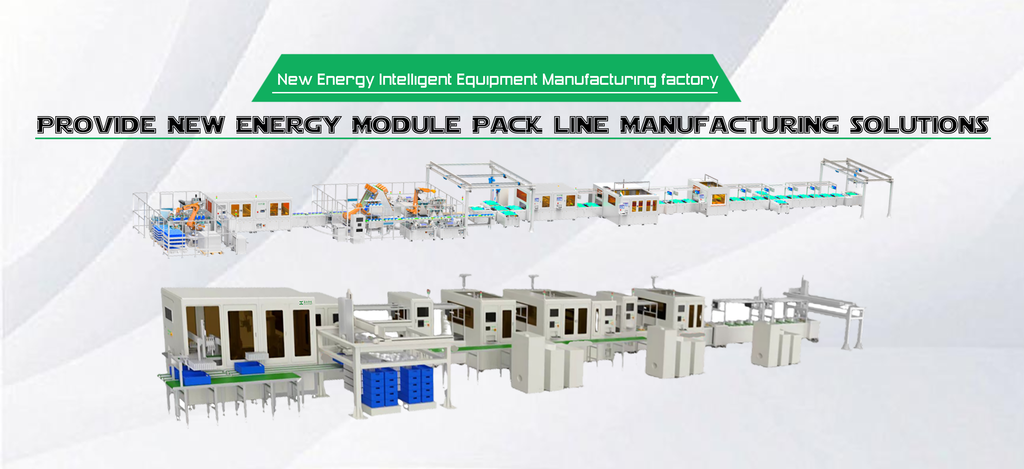
Jialuo Intelligent’s product portfolio covers three main production-line categories: battery module PACK lines, battery module steel strap forming lines, and CCS automated production lines. The company also provides supporting equipment and customized automation solutions.
1. Battery Module PACK Production Lines
Battery module PACK production lines are designed to support battery module assembly and related manufacturing processes. Configurations are available for prismatic, pouch, and cylindrical cell applications, subject to the requirements of the specific project.
Depending on the product and process route, a line may include:
- Cell loading and positioning
- Cell height measurement and OCV testing and sorting
- Cell stacking and module assembly
- Polarity detection and identification
- Laser cleaning and busbar welding
- Electrical testing and other quality checks
- Final module or PACK assembly operations
The exact station configuration depends on the cell format, module structure, joining method, required output, and automation level.
Jialuo Intelligent develops both semi-automatic and fully automatic solutions. Rather than applying the same configuration to every customer, the equipment scope is defined according to the intended product and production requirements.
2. Battery Module Steel Strap Forming Lines
Battery module steel strap forming lines are designed for the forming and processing of steel straps used to secure battery modules.
Depending on the required product and process, the equipment may integrate operations such as:
- Material uncoiling and leveling
- Blanking and forming
- Sleeve insertion
- Heat shrinking and cooling
- Trimming and bending
- Welding
- Dimensional inspection
- Insulation withstand testing and pull testing
Material specifications, strap dimensions, forming requirements, and inspection criteria must be evaluated for each application.
This equipment category serves a different purpose from a battery module PACK assembly line. It focuses on steel strap processing and forming rather than the complete battery module or PACK assembly process.
3. CCS Automated Production Lines
CCS, or Cell Contact System, assemblies integrate electrical connection components and flexible circuit elements used in battery modules.
A CCS automated production line may include busbar positioning, FPC assembly, pulse hot riveting, laser welding, electrical testing, and automated optical inspection (AOI), depending on the product design.
For example, some configurations may use laser welding for busbar joining and pulse hot riveting for FPC assembly. Other process requirements can be evaluated during the technical proposal stage.
The final configuration depends on the CCS structure, joining method, inspection requirements, and production capacity.
4. Supporting Equipment and Customized Automation
In addition to the main production-line categories, Jialuo Intelligent provides supporting equipment such as:
- Prismatic cell cover plate assembly and welding equipment
- Integrated cover plate testing equipment
- Cell sorting machines
- Blue film wrapping machines
- Battery module testing solutions
- Customized lithium battery automation equipment
These systems can serve as standalone machines or as part of a larger production line, depending on the customer’s existing manufacturing setup.
What Engineering Capabilities Support These Solutions?
Battery production equipment must coordinate mechanical structures, motion control, process technologies, inspection systems, and data communication. Engineering integration is therefore an important part of the equipment development process.
Mechanical Design and Fixturing
Mechanical engineering covers station frames, fixtures, grippers, clamping structures, tooling plates, and material-handling mechanisms.
These components must accommodate the product’s geometry and dimensional tolerances. Accurate product drawings and, where appropriate, sample parts help engineers evaluate fixture design and positioning requirements during the early stages of a project.
Automation Control and Equipment Integration
Automation engineering covers station sequencing, motion control, recipe management, alarm handling, and interlock logic.
For projects involving multiple stations, equipment integration also requires coordination of material flow, process timing, and communication between individual units.
Safety functions and electrical systems should be designed and assessed according to the applicable requirements for the equipment and destination market.
Vision, Laser, and Inspection Technologies
Depending on the application, Jialuo Intelligent’s equipment solutions may incorporate robotic handling, vision-based positioning and inspection, laser welding, laser cutting, and automated material handling.
Testing capabilities may include insulation withstand testing, voltage and internal resistance measurement, and air-tightness testing.
The availability and configuration of each technology depend on the specific equipment model and project scope.
MES and Production Data Integration
For projects requiring production traceability, equipment may be configured to exchange information with a manufacturing execution system (MES).
Relevant data may include product identification, process parameters, inspection results, and production records.
The communication interface, required data fields, and responsibility for data storage should be agreed upon during the technical proposal stage. These requirements can affect both station-level controls and the overall software integration plan.
How Is Equipment Manufactured and Verified Before Shipment?
Equipment manufacturing involves more than assembling mechanical and electrical components. Integration, functional testing, and process verification are also important steps before a line is shipped to the customer.
Equipment Assembly and Pre-Commissioning in Shenzhen
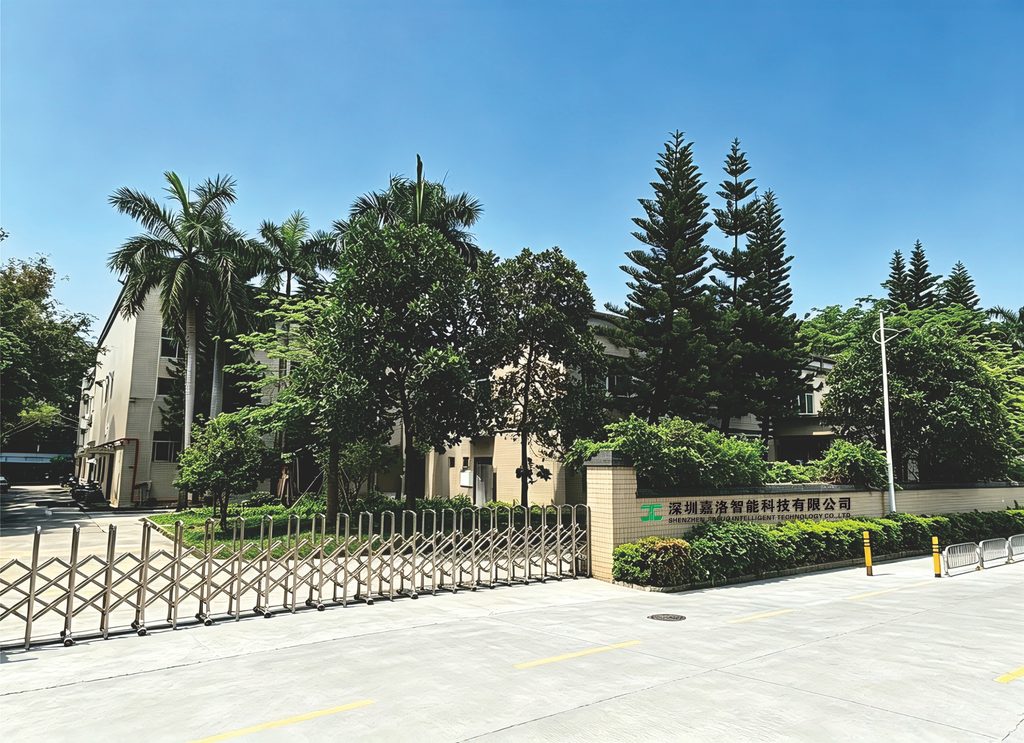
Jialuo Intelligent assembles and integrates equipment at its Shenzhen facility.
Before shipment, pre-commissioning activities may include checking mechanical movement, verifying control functions, testing station sequences, and evaluating agreed process requirements.
The scope of pre-shipment testing depends on the equipment configuration and the project acceptance plan.
Conducting these activities at the manufacturing facility helps identify issues before delivery and prepares the equipment for subsequent installation and commissioning at the customer’s site.
Installation and Commissioning at the Customer’s Facility
After delivery, on-site work may include equipment positioning, utility connection, station integration, process debugging, and production validation.
The installation team typically consists of engineers and technicians working with the customer’s production and facility personnel. For overseas projects, interpreter support may be arranged where required.
The actual implementation schedule depends on equipment complexity, site readiness, utility availability, material preparation, and the agreed acceptance procedure.
Customers can help keep the project on schedule by preparing the installation area, utilities, product samples, and necessary technical information in advance.
Acceptance Documentation and Test Records
Acceptance requirements should be defined according to the equipment’s intended function and agreed technical specifications.
Depending on the project, documentation may include functional test results, station-level inspection records, process parameters, and traceability data.
Agreeing on the acceptance scope before manufacturing begins helps both parties understand which results must be demonstrated during commissioning and final acceptance.
Where Does Jialuo Intelligent Deliver Its Equipment?
Jialuo Intelligent serves domestic and overseas customers in the lithium battery and new energy equipment sector.
Domestic Project Coverage
Domestic project experience includes major new energy industry regions such as Beijing, Shanghai, Guangzhou, and Shenzhen, as well as Zhengzhou, Wuhan, Tianjin, Hefei, and Nanjing.
Different customers may have different product specifications, manufacturing processes, and documentation requirements. Equipment configuration and project implementation are therefore evaluated according to each customer’s needs.
Overseas Project Experience
The company’s export project coverage includes Europe, the Middle East, Southeast Asia, and South Korea.
For overseas equipment projects, destination-specific requirements should be discussed before manufacturing begins. Relevant considerations may include applicable safety standards, electrical specifications, documentation language, site utilities, shipping arrangements, and commissioning responsibilities.
Confirming these requirements early helps align the equipment design with the intended installation environment.
Which Certifications and Quality Systems Apply?
Certifications and compliance requirements are important when selecting a supplier for industrial automation equipment.
Jialuo Intelligent reports that it holds National High-Tech Enterprise status, certificate No. GR202544206903, and Shenzhen Specialized SME recognition.
The company also reports ISO 9001 and ISO 14001 certifications. For export projects, CE or UL-related requirements should be evaluated according to the applicable equipment, destination market, and project scope.
Buyers should confirm the relevant certificates, validity periods, certificate holders, and applicable product or equipment scope during supplier evaluation.
Technology and Component Partnerships
Jialuo Intelligent reports working with German technology partners, including Lasercomb and Rofin.
Depending on the application, equipment may use established component families for laser sources, welding controllers, vision systems, and test instruments.
The specific brands and models should be confirmed in the equipment proposal and bill of materials. This allows buyers to evaluate component suitability, maintenance requirements, and spare-parts arrangements for the intended application.
How Does Jialuo Intelligent Handle Non-Standard Projects?
Battery products vary in cell format, module structure, joining requirements, and production capacity. For this reason, many battery module production lines require project-specific engineering.
Jialuo Intelligent typically defines the customization scope during the technical proposal stage. The scope may cover:
- Mechanical structures, fixtures, and tooling
- Production process and station configuration
- Automation control and operating logic
- Vision inspection and testing
- MES interfaces and traceability requirements
- Installation, commissioning, and acceptance criteria
Established design platforms may be reused where appropriate, while product-specific components and processes are adapted to the customer’s requirements.
This approach allows the project team to evaluate customization needs without assuming that every component must be developed from scratch.
Reference Production Capacity
Production capacity depends on the product, process route, and equipment configuration.
For reference, certain configurations may target the following output ranges:
- Prismatic cell PACK lines: approximately 12–15 PPM
- Pouch cell PACK lines: approximately 10–12 PPM
- Cylindrical cell PACK lines: approximately 30–40 PPM
These figures are reference values for specific configurations, not guaranteed outputs for every project. Actual capacity depends on cell specifications, module structure, process sequence, automation level, and operating conditions. Final targets should be confirmed in the technical proposal and equipment acceptance criteria.
Installation and Commissioning Time
Installation and commissioning schedules also vary by equipment type and project complexity.
As reference values, installation and commissioning for some domestic steel strap lines may take approximately 7–10 days, while other battery module production lines may require around 30 days. Overseas implementation may be completed within approximately one month for suitable projects, depending on the agreed scope and site readiness.
These durations are indicative only. The final schedule should be agreed upon based on equipment complexity, utilities, integration requirements, and the acceptance procedure.
Frequently Asked Questions
What Is Jialuo Intelligent’s Core Business?
Jialuo Intelligent focuses on intelligent equipment and production-line solutions for lithium battery manufacturing. Its main product categories include battery module PACK lines, battery module steel strap forming lines, and CCS automated production lines, supported by testing equipment and customized automation solutions.
Which Cell Formats Can the PACK Lines Support?
The company’s PACK line portfolio includes configurations for prismatic, pouch, and cylindrical cells. Compatibility and changeover requirements must be evaluated against the specific cell drawings, module structure, and manufacturing process. Different cell formats should not be assumed to be interchangeable on the same line without engineering evaluation.
Does Jialuo Intelligent Provide Overseas Installation and Commissioning?
The company provides on-site installation and commissioning for its equipment. Equipment is pre-commissioned at its Shenzhen facility before shipment, while the on-site scope and schedule are agreed according to the project requirements. Interpreter support may be arranged for overseas projects.
Are the Production Lines Standard Products?
Many production lines are customized according to the customer’s product and process requirements, while suitable standardized design platforms and components may be reused. The final scope depends on the required equipment configuration and the level of customization.
What Information Is Needed for a Technical Proposal?
Useful information includes product drawings, cell format, module structure, target production capacity, process requirements, joining methods, inspection criteria, factory layout, and any MES or traceability requirements.
The more complete the technical information, the easier it is to evaluate the appropriate line configuration and project scope.
About Jialuo Intelligent
Shenzhen Jialuo Intelligent Technology Co., Ltd. develops intelligent equipment and production-line solutions for lithium battery manufacturing.
Our product portfolio includes:
- Battery Module PACK Production Lines
- Battery Module Steel Strap Forming Lines
- CCS Automated Production Lines
- Prismatic Cell Cover Plate Assembly and Welding Equipment
- Battery Module Testing Solutions
- Customized Lithium Battery Automation Equipment
Founded in 2008, Jialuo Intelligent has focused on intelligent equipment for the new energy and lithium battery industry since 2019.
Our engineering capabilities cover mechanical design, automation control, equipment integration, line commissioning, and customized manufacturing solutions.
Looking for a Lithium Battery Equipment Supplier?
Every battery manufacturing project has its own technical requirements. Cell format, module structure, joining methods, inspection scope, production capacity, and factory conditions can all influence the final equipment configuration.
If you are planning a new battery module PACK line, a CCS assembly line, a steel strap forming line, or another lithium battery automation project, Jialuo Intelligent can discuss your requirements and evaluate a suitable equipment solution.
To start a technical discussion, please share your product drawings, target output, required process steps, quality requirements, and factory layout if available.
Shenzhen Jialuo Intelligent Technology Co., Ltd.
Email: jch@cnjialuo.com
WhatsApp: +86 181 2473 5015
Address: Room 101, Building 2, No. 8, Chengguang Industrial Park, Kukeng, Dafu Community, Guanlan Street, Longhua District, Shenzhen, China
Jialuo Intelligent | Battery Automation Solutions