
In battery manufacturing, changing from one module or PACK configuration to another can affect production efficiency, equipment utilization, and delivery schedules.
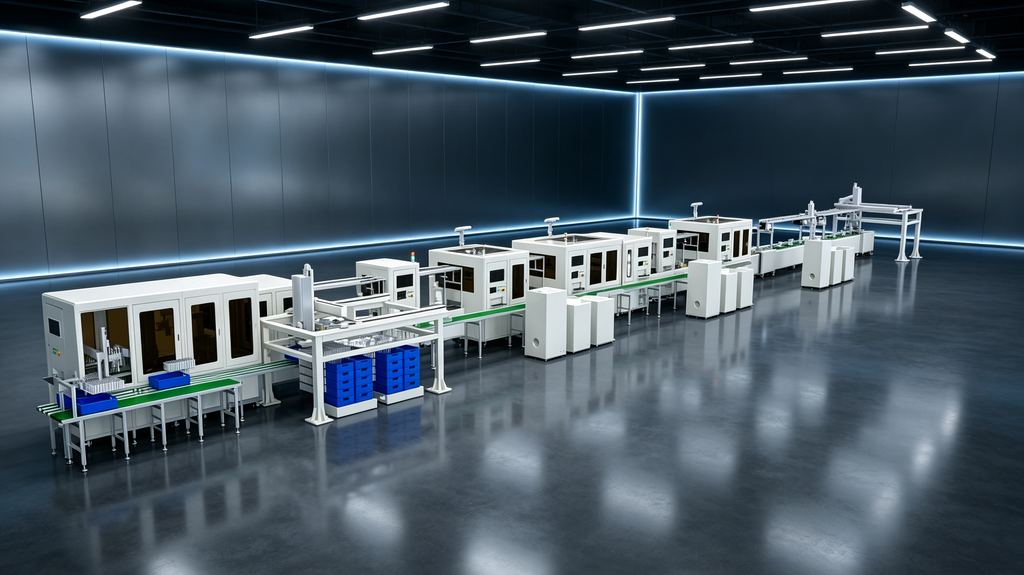
A production line may achieve its target output when manufacturing a single product, yet lose valuable production time when switching between different cell specifications, module structures, or process requirements. Fixture adjustments, parameter changes, equipment verification, and quality checks can all contribute to changeover downtime.
For battery manufacturers handling multiple product variants, flexible changeover is an important factor when selecting a battery module PACK production line.
At Jialuo Intelligent, changeover requirements should be considered during the initial equipment design. By defining product compatibility, changeover procedures, and process requirements in advance, manufacturers can build a production line that better supports mixed-product manufacturing and future production needs.
Why Does Changeover Time Matter in Battery Manufacturing?
Peak production speed is only one measure of production-line performance. In actual manufacturing environments, the time required to switch between product variants also affects overall productivity.
Depending on the line configuration, changeover may involve:
- Adjusting or replacing fixtures and positioning components
- Changing cell specifications or module assembly parameters
- Updating welding and inspection settings
- Switching product recipes and process parameters
- Verifying equipment operation after adjustments
- Performing quality checks before resuming normal production
When these activities are not planned properly, frequent product changes can reduce available production time and create additional pressure on delivery schedules.
For manufacturers producing several module or PACK variants, the objective is not simply to maximize the speed of a single production run. It is to achieve stable production, repeatable changeover procedures, and consistent product quality across the required product range.
Four Design Factors That Can Improve Changeover Efficiency
The most effective changeover strategy depends on the product structure, equipment configuration, and degree of variation between products. The following design factors can help reduce unnecessary adjustments and downtime.
1. Recipe-Based Process Parameter Management
Different battery cell specifications and module designs may require different process parameters.
Where recipe-based control is supported, operators can select a predefined product configuration instead of manually entering every parameter at each changeover.
Depending on the equipment design, recipes may contain relevant settings for cell positioning, assembly operations, inspection limits, or other controlled processes.
This approach can reduce repetitive setup work and help maintain consistent operating conditions between production batches.
However, recipe switching does not eliminate every physical adjustment. Fixture changes, tooling adjustments, and process verification may still be required when product structures differ.
2. Automated Parameter Management and MES Integration
For manufacturers with multiple product variants and formal traceability requirements, parameter management can be an important part of changeover planning.
Where MES integration is included in the equipment scope, production instructions and approved process parameters may be exchanged between the manufacturing management system and the production line.
Depending on the integration design, this can help coordinate product identification, process settings, inspection requirements, and production records.
Before specifying this functionality, manufacturers should confirm:
- Which parameters can be transferred automatically
- Whether recipe selection is linked to product identification
- How unauthorized parameter changes are controlled
- Which process and inspection data are recorded
- Whether the interface is compatible with the customer’s MES
A clearly defined data interface helps avoid unnecessary manual entry and supports more consistent production management.
3. Appropriate Welding Process Configuration
Welding requirements can significantly influence the flexibility of a battery module PACK line.
Different cell formats, terminal structures, busbar materials, and connection designs may require different joining processes. Depending on the product and equipment configuration, welding technologies may include laser welding, resistance welding, or other suitable methods.
For example, some cylindrical battery module applications may use resistance welding, while other designs may require laser welding.
However, different welding methods are not automatically interchangeable on the same production line. Laser welding and resistance welding require different process configurations, tooling, controls, and safety considerations.
If a production line must support multiple products or welding processes, the required compatibility should be evaluated during the technical design stage.
Selecting the appropriate welding configuration in advance can help avoid costly modifications when product requirements change.
4. Flexible Fixtures and Defined Compatibility Ranges
Fixtures and positioning systems are another important consideration when planning product changeovers.
A fixture designed for a specific cell or module structure may require replacement or adjustment when the product changes. Depending on the differences between variants, adjustable tooling, interchangeable fixture components, or modular positioning systems may reduce setup work.
When evaluating a flexible battery module PACK production line, manufacturers should confirm:
- Which cell and module specifications are supported
- Which fixture components can be adjusted
- Which components require replacement
- Whether software parameter changes are sufficient for certain transitions
- Whether tooling changes require manual intervention
- How much validation is required before production resumes
The objective is not to promise unlimited compatibility. It is to define a practical range of supported products and establish a repeatable procedure for switching between them.
What Does Flexible Changeover Really Mean?
A flexible production line is not necessarily a line that can manufacture every battery module design without modification.
Cell dimensions, terminal positions, module architecture, connection methods, and inspection requirements can differ substantially between products. Some changes may require only parameter adjustments, while others may require new tooling, mechanical modifications, or a different process configuration.
For this reason, changeover flexibility should be defined by the actual product variants the customer intends to manufacture.
A practical changeover specification should distinguish between:
- Parameter changeover: Switching approved recipes or process settings
- Tooling changeover: Adjusting or replacing fixtures and tooling components
- Process changeover: Modifying operations to accommodate different assembly or joining requirements
- Qualification after changeover: Verifying equipment operation and product quality before normal production resumes
This distinction makes it easier to estimate changeover time, identify potential downtime, and evaluate whether a proposed production line meets the customer’s operational requirements.
How to Evaluate Changeover Performance Before Purchasing a PACK Line
Changeover capability should be discussed during equipment planning rather than assessed only after installation.
Before selecting a battery module PACK production line, manufacturers should establish clear evaluation criteria.
Define the Product Range
Provide the equipment supplier with the specifications and drawings for the cell types, module structures, and PACK variants that the line must support.
The greater the differences between products, the more important it becomes to evaluate tooling, process compatibility, and changeover requirements individually.
Establish the Changeover Target
Define which production transitions matter most and the acceptable time required for each one.
For example, switching between two products with similar dimensions may require less adjustment than changing to a product with a different cell arrangement, fixture structure, or welding process.
The target should specify which activities are included in the changeover time, such as tooling replacement, parameter adjustment, equipment verification, and first-piece inspection.
Verify the Required Process Functions
Confirm whether recipe management, automated parameter transfer, vision-system adjustment, MES integration, and other functions are included in the proposed equipment configuration.
These functions should be documented in the technical proposal rather than assumed to be standard features.
Validate Changeover and Product Quality
Where practical, representative product variants should be included in the equipment validation plan.
Verification can cover the changeover procedure, equipment operating status, process parameters, inspection results, and product acceptance criteria.
A repeatable validation process helps ensure that reducing setup time does not compromise manufacturing quality.
Key Takeaways
Flexible changeover is an important consideration for battery manufacturers producing multiple module or PACK variants. The objective is to reduce unnecessary downtime while maintaining process stability and product quality.
The main points to consider are:
- Recipe-based parameter management can reduce repetitive manual setup where supported.
- MES integration may help coordinate production instructions, process parameters, and traceability data.
- Welding technology must match the actual cell, terminal, and connection design.
- Flexible fixtures can simplify some product changes, but compatibility depends on the differences between products.
- Changeover time should be defined using clear start and finish criteria.
- Equipment capability, changeover procedures, and validation requirements should be confirmed before production-line acceptance.
The most effective changeover strategy is not unlimited flexibility. It is a clearly defined, validated process designed around the products a manufacturer actually needs to produce.
Frequently Asked Questions
What Is Changeover in a Battery Module PACK Production Line?
Changeover is the process of preparing a production line to manufacture a different product or product variant. Depending on the equipment and product differences, it may involve fixture adjustments, parameter changes, tooling replacement, process verification, and quality checks.
Can One PACK Line Handle Multiple Battery Module Designs?
It depends on the cell specifications, module architecture, assembly process, and equipment configuration.
Some product variants may be supported through parameter changes and adjustable fixtures. Others may require tooling replacement or more substantial equipment modifications.
Compatibility should be confirmed against the actual product drawings and process requirements.
Can Recipe Switching Eliminate Changeover Downtime?
Recipe switching can reduce the time spent on repetitive parameter adjustments, but it does not eliminate all changeover activities.
Physical tooling changes, equipment checks, and product quality verification may still be necessary. The achievable changeover time depends on the production-line design and the differences between the products.
How Should Changeover Time Be Specified in an Equipment Proposal?
The specification should define the starting point, completion point, activities included, supported product variants, and required quality checks.
Where multiple product transitions are required, it is useful to evaluate each representative transition separately rather than rely on a single general changeover-time estimate.
About Jialuo Intelligent
Shenzhen Jialuo Intelligent Technology Co., Ltd. develops intelligent equipment and customized production-line solutions for lithium battery manufacturing.
Our product portfolio includes:
- Battery Module PACK Production Lines
- Battery Module Steel Strap Forming Lines
- CCS Automated Production Lines
- Prismatic Cell Cover Plate Assembly and Welding Equipment
- Battery Module Testing Solutions
- Customized Lithium Battery Automation Equipment
Our engineering capabilities cover mechanical design, automation control, equipment integration, line commissioning, and customized manufacturing solutions.
Planning a Flexible Battery Module PACK Production Line?
The right production-line configuration starts with a clear understanding of your products, manufacturing process, and changeover requirements.
If you are planning a new battery module PACK line or upgrading an existing production system, share your cell specifications, module drawings, target production capacity, and expected product variants with our engineering team.
Jialuo Intelligent can evaluate the required process route and develop a customized equipment solution based on your production goals, compatibility requirements, and quality standards.
Contact Jialuo Intelligent
Email: jch@cnjialuo.com
WhatsApp: +86 181 2473 5015
Jialuo Intelligent | Battery Automation Solutions
Note: Battery module PACK production lines are customized to order. Actual cycle time, product compatibility, changeover procedures, and automation functions depend on cell specifications, module structure, process route, and equipment configuration. Final requirements should be confirmed in the project technical proposal.