
As electric vehicles and energy storage systems continue to expand worldwide, lithium battery packs have become a critical component in modern energy solutions.
However, producing a reliable lithium battery pack requires much more than simply connecting battery cells together.
A complete lithium battery pack manufacturing process involves multiple precision manufacturing steps, including:
- Battery cell inspection
- Cell sorting and matching
- Module assembly
- Electrical connection
- Laser welding
- BMS installation
- End-of-line testing
For battery manufacturers, choosing the right battery pack production line is essential to achieve high efficiency, stable quality, and scalable production capacity.
This article explains the complete battery pack manufacturing process and the key equipment required for modern battery production.
Battery Cell Incoming Inspection
The first step of lithium battery pack manufacturing is incoming inspection of battery cells.
Before assembly, every battery cell must be checked to ensure quality and consistency.
Common inspection items include:
- Voltage measurement
- Internal resistance testing
- Capacity verification
- Appearance inspection
Battery cells with inconsistent performance may reduce the reliability and lifespan of the final battery pack.
Therefore, automated inspection systems are widely used in modern battery manufacturing.
A reliable inspection process helps manufacturers:
- Improve product consistency
- Reduce defective products
- Increase battery safety
Cell Sorting and Matching
After inspection, battery cells need to be sorted and matched according to their electrical characteristics.
The purpose of cell matching is to ensure that cells with similar performance are assembled together.
Important matching parameters include:
- Voltage
- Capacity
- Internal resistance
Proper cell sorting improves:
- Battery pack performance
- Charging consistency
- Cycle life
In large-scale production, automatic sorting equipment helps improve efficiency and reduce manual errors.
Module Assembly Process
After cell preparation, multiple battery cells are assembled into battery modules.
A typical battery module assembly process includes:
Cell Positioning
Cells are accurately placed according to the module design.
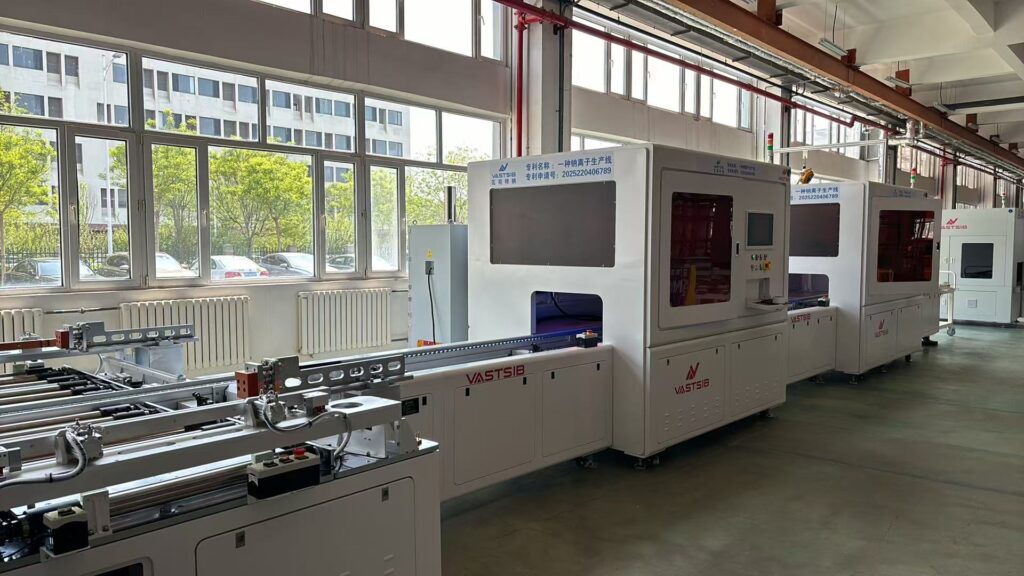
Automation equipment ensures:
- Precise positioning
- Stable production speed
- Consistent assembly quality
Adhesive Application
Special adhesives are applied to fix cells and improve mechanical stability.
Cell Stacking
Cells are arranged according to the required module structure.
For prismatic battery modules, accurate stacking is especially important because it directly affects:
- Space utilization
- Thermal performance
- Electrical connection quality
Module Electrical Connection
Cells are connected through busbars or conductive components.
This process requires high precision to ensure reliable electrical performance.
For manufacturers producing high volumes of battery modules, a professional battery module assembly line improves production efficiency and product quality.
Laser Welding Process
Laser welding is one of the most important technologies in lithium battery pack manufacturing.
It is commonly used for:
- Busbar welding
- Cell connection
- Electrical terminal welding
Compared with traditional welding methods, laser welding provides:
High Precision
Laser systems can achieve accurate welding positions with minimal impact on surrounding components.
Strong Connection Quality
Reliable welding improves electrical performance and battery safety.
High Production Efficiency
Automated laser welding systems support continuous mass production.
Modern battery production lines often integrate laser welding equipment with automated handling systems to achieve intelligent manufacturing.
BMS Installation
The Battery Management System (BMS) is a critical component inside a battery pack.
The BMS is responsible for monitoring and controlling:
- Battery voltage
- Temperature
- Charging status
- Safety conditions
During battery pack assembly, the BMS installation process requires accurate electrical connection and testing.
A properly installed BMS helps:
- Prevent overcharging
- Improve battery safety
- Extend battery lifespan
End Of Line Testing
Before a lithium battery pack leaves the production line, it must pass final quality testing.
End-of-line (EOL) testing verifies whether the finished battery pack meets performance and safety requirements.
Common EOL testing items include:
Electrical Performance Testing
Checking:
- Voltage
- Current
- Power output
Communication Testing
Checking communication between:
- Battery pack
- BMS
- External control systems
Safety Testing
Including:
- Insulation testing
- Protection function testing
EOL testing is a key process in ensuring reliable battery products.
Automation Equipment Used in Battery Pack Production
Modern lithium battery manufacturing requires advanced automation equipment to achieve efficient and stable production.
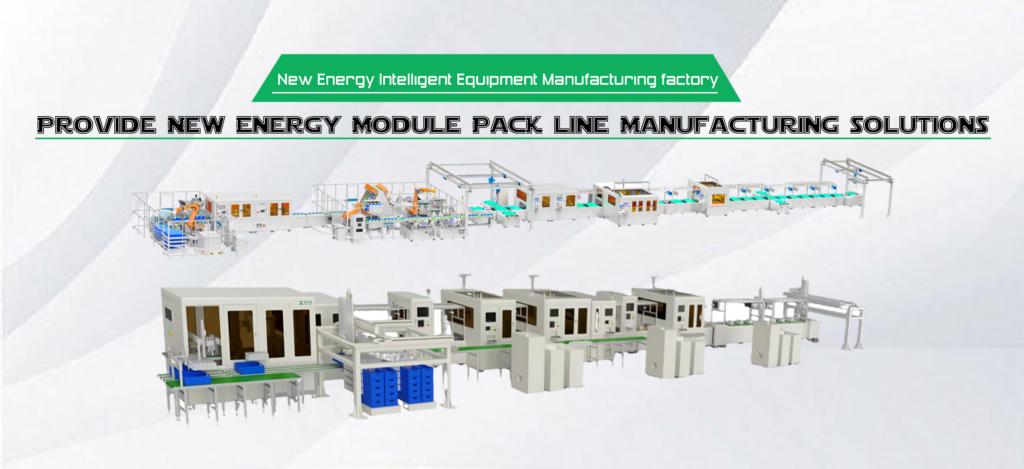
A complete battery pack production line usually includes:
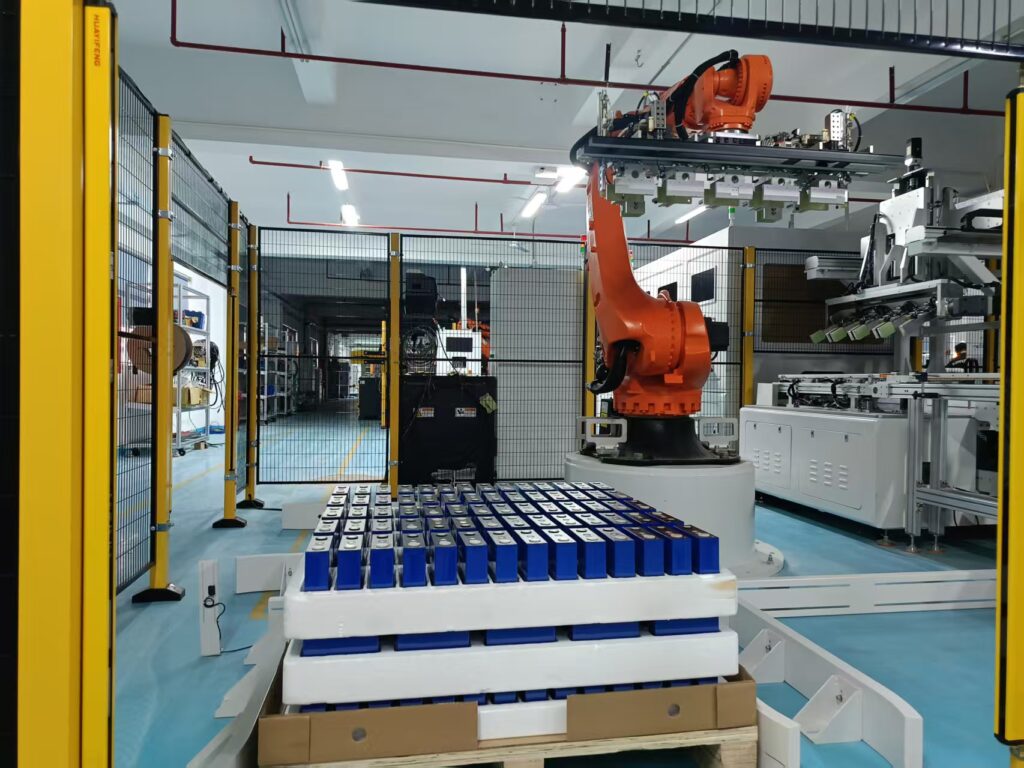
Automatic Material Handling System
Used for:
- Cell transportation
- Module transfer
- Production flow management
Cell Assembly Equipment
Used for:
- Cell positioning
- Stacking
- Module forming
Laser Welding Equipment
Used for precise electrical connections.
Testing Equipment
Used for:
- Quality inspection
- Performance verification
- Safety testing
Production Line Control System
Smart control systems help manufacturers monitor:
- Production status
- Equipment operation
- Quality data
A complete battery pack assembly line integrates these processes into one automated manufacturing solution.
Why Manufacturers Choose Automated Battery Pack Production Lines
As battery demand increases, traditional manual assembly cannot meet the requirements of large-scale production.
Automated battery production lines provide several advantages:
Higher Production Efficiency
Automation reduces manual operation time and improves output capacity.
Better Product Consistency
Precision equipment ensures every battery pack meets quality standards.
Lower Manufacturing Cost
Automation reduces labor dependency and improves production efficiency.
Improved Safety
Automated inspection and controlled processes reduce manufacturing risks.
How Jialuo Intelligent Supports Battery Pack Manufacturing
Jialuo Intelligent provides customized lithium battery automation solutions for global battery manufacturers.
Our solutions include:
- Battery pack assembly line
- Battery module production line
- CCS assembly line
- Customized automation equipment
With professional engineering capability and manufacturing experience, Jialuo Intelligent helps customers build efficient and reliable battery production systems.
Conclusion
The lithium battery pack manufacturing process involves multiple precision steps, from battery cell inspection and sorting to module assembly, laser welding, BMS integration, and final testing.
Each manufacturing stage directly affects battery performance, safety, and reliability.
For companies planning EV battery or energy storage production, investing in a reliable battery pack production line is essential for achieving efficient and scalable manufacturing.
With advanced automation technology, manufacturers can improve quality, reduce production costs, and prepare for the future growth of the battery industry.
CTA
Build Your Battery Pack Production Line with Jialuo Intelligent
Looking for a reliable battery pack assembly line manufacturer?
Jialuo Intelligent provides customized battery automation solutions for EV battery and energy storage manufacturers worldwide.
Get Your Battery Production Solution Today