
When comparing quotations for a battery module PACK line, buyers often focus on headline performance figures such as parts per minute (PPM), cycle time, and annual production capacity.
However, one important factor is often overlooked: changeover time — the time required to switch a production line from one product variant to another.
For manufacturers handling multiple module designs or frequent small-batch orders, changeover time can affect effective production capacity, delivery schedules, labor utilization, and the return on investment (ROI) of the production line.
A line with a higher rated output does not necessarily deliver more qualified products over a year if it spends more time preparing for product changes.
This guide explains what changeover time includes, which factors influence it, and how buyers can evaluate its impact when selecting a battery module PACK line.
Shenzhen Jialuo Intelligent Technology Co., Ltd. develops battery module PACK lines, battery module steel strap forming lines, CCS automated production lines, and customized lithium battery automation equipment for different manufacturing requirements.
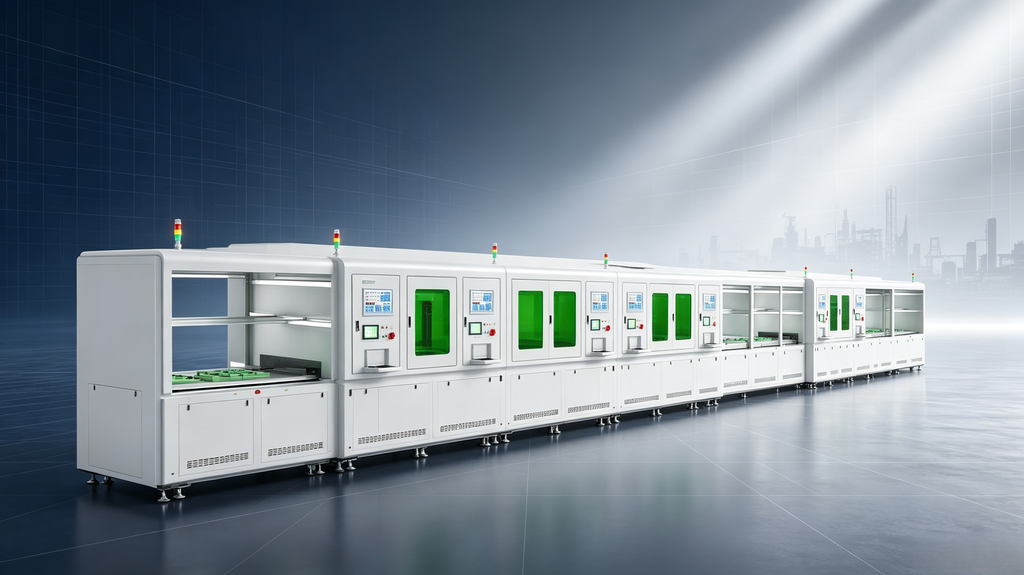
Why Does Changeover Time Matter for Battery Line ROI?
A production line is a long-term investment. Its financial performance depends not only on the purchase price and rated production speed, but also on how much qualified output it can deliver during the available production hours.
When a line manufactures only one product for an extended period, changeovers may account for a relatively small share of operating time. When production schedules include multiple module designs, frequent order changes, or short production runs, the impact can become more significant.
What Does Changeover Time Include?
Changeover time generally refers to the period required to prepare a production line for a different product or production configuration. Depending on the equipment and process, this may include:
- Stopping the line and clearing the previous product or materials
- Changing fixtures, jigs, tooling, or end effectors where required
- Selecting new production programs, recipes, or welding parameters
- Updating machine-vision references and inspection settings
- Adjusting test recipes, product identification, and traceability data
- Producing trial parts and completing first-piece quality checks before restarting normal production
The exact activities depend on the product designs and the technical scope of the line.
For example, two module variants with similar dimensions and process requirements may require only limited adjustments. Products with different structures, cell formats, or joining requirements may need more extensive preparation.
The key question is not simply how quickly a line runs, but how efficiently it can return to qualified production after a product change.
Why Is Changeover Time Often Missing from ROI Calculations?
Rated throughput is usually easy to obtain from a supplier’s quotation. Changeover time is more difficult to estimate because it depends on several variables, including:
- The differences between the products being manufactured
- The number of product changes scheduled each month
- Fixture and tooling arrangements
- Program management and automation design
- Operator experience and material readiness
- First-piece inspection and process validation requirements
As a result, some preliminary investment comparisons focus on rated output without fully accounting for production interruptions.
A more complete evaluation should consider rated throughput, planned operating hours, expected availability, product yield, and time lost during changeovers.
What Factors Affect Changeover Time on a Battery Module PACK Line?
Changeover performance depends on the relationship between the product mix, the equipment configuration, and the production schedule. Three areas deserve particular attention.
1. Product Mix and Order Size
A line producing one module design in large batches may require relatively few changeovers. A line serving multiple customers or product variants may need to switch configurations much more frequently.
Consider two manufacturers with the same rated production speed.
- Manufacturer A produces a small number of product variants in long batches.
- Manufacturer B produces more variants and frequently switches between small orders.
Even if both lines operate at the same rated speed, Manufacturer B may lose more production hours to changeovers.
For this reason, buyers should discuss the expected product mix, monthly order patterns, and future product roadmap with the equipment supplier before finalizing the line configuration.
2. Which Stations Determine the Changeover Duration?
The total changeover time is often determined by the most time-consuming preparation or validation step, rather than the average time required by all stations.
Depending on the production process, critical activities may include:
- Fixture changes at cell positioning, stacking, or module assembly stations
- Parameter changes at busbar, terminal, or steel strap joining stations
- Vision-system adjustments at inspection stations
- Test recipe changes and channel mapping at end-of-line testing stations
Mechanical adjustments may require more time than selecting a stored program. However, a program change alone does not guarantee that the new configuration is ready for production. Safety checks, process verification, and first-piece quality confirmation may still be necessary.
Buyers should therefore ask suppliers to identify the expected changeover steps for the specific product variants included in the project.
3. Recipe Management and Program Switching
Recipe-based production management can reduce the need for repeated manual parameter entry.
Depending on the system design, a product recipe may store or recall settings such as:
- Machine motion and positioning parameters
- Welding process parameters
- Machine-vision inspection references
- Testing configurations
- Product identification and traceability information
When the required settings are properly managed and validated, recipe-based switching can make product changes more consistent and reduce setup errors.
The actual benefit depends on the number of product variants, how frequently they alternate, and which process parameters can be changed through software rather than mechanical intervention.
For manufacturers with a stable product family, extensive flexibility features may not always justify their additional cost. For manufacturers handling frequent product changes, they may have a greater effect on effective capacity.
How Can Buyers Estimate the Impact of Changeover Time?
A preliminary estimate does not require a complicated financial model. Buyers can start with three basic inputs:
- The expected number of changeovers per month
- The estimated duration of each changeover
- The planned production hours available per month
These figures can initially be expressed as ranges and refined during technical discussions.
How to Calculate Production Hours Lost to Changeovers
The calculation is straightforward:
Monthly changeover hours = Number of changeovers × Average duration per changeover
For example, suppose a hypothetical production line performs 12 changeovers per month, with each changeover taking an average of 1.5 hours.
Monthly changeover time would be:
12 × 1.5 = 18 hours per month
If the line has 240 planned production hours per month, those changeovers represent 7.5% of the planned hours.
This example is illustrative only. It does not represent a guaranteed changeover duration for any specific Jialuo Intelligent production line.
The actual result will depend on the product variants, equipment design, production schedule, and validation requirements.
How to Estimate Effective Production Capacity
A simplified estimate can help buyers understand how production losses affect output.
Effective output ≈ Rated production rate × Available production hours × Availability × Yield
When calculating the result, planned production hours should be reduced by changeover time and any other excluded downtime. Availability and yield should then reflect the agreed assumptions for the evaluation.
For example, consider a hypothetical line with the following planning assumptions:
- Rated output: 12 units per minute
- Planned production time before changeover losses: 240 hours per month
- Changeover losses: 18 hours per month
- Other downtime: excluded from this simplified example
- Yield: assumed to be 100% for illustration only
After subtracting changeover time, the remaining production time is 222 hours.
At the stated hypothetical rated speed, the theoretical output during those hours would be:
12 × 60 × 222 = 159,840 units
Without accounting for changeover time, the theoretical output would be 172,800 units.
The difference is 12,960 units of theoretical output for the month.
These figures are for explaining the calculation only. Actual production output will depend on the unit definition used for the rated speed, the production process, availability, yield, and other operating conditions. The example should not be treated as a production guarantee or a forecast for a specific battery module PACK line.
The important point is that changeover time should be included in the capacity model before buyers compare the expected output and investment cost of different line configurations.
What Production-Speed Figures Should Buyers Compare?
Production speed is useful when comparing equipment, but the figures must refer to comparable products and process conditions.
For reference, certain configurations may be designed around the following nominal rates:
- Prismatic battery module PACK line: approximately 12–15 PPM
- Pouch battery module line: approximately 10–12 PPM
- Cylindrical battery module line: approximately 30–40 PPM
These figures are indicative examples for specific configurations, not universal industry benchmarks or guaranteed performance figures. PPM may also refer to different production units depending on the equipment and supplier, so buyers should confirm exactly what is being counted.
Before comparing quotations, clarify:
- Whether PPM refers to cells, modules, packs, or another defined unit
- The product structure and cell specifications used for the estimate
- The process steps included in the quoted line
- The expected operating conditions and automation level
- The quality criteria used to define qualified output
- Whether the stated rate represents a station cycle time, a line rate, or sustained production performance
The final production rate and changeover requirements should be confirmed against the customer’s product specifications, process route, and agreed technical proposal.
How Should Buyers Balance Flexibility and Throughput?
Flexible production equipment can help manufacturers respond to changing product requirements, but flexibility features may also increase equipment cost and system complexity.
The right configuration depends on the manufacturer’s production strategy.
When Is Greater Flexibility Worth the Investment?
Additional flexibility may be valuable when a manufacturer expects:
- Frequent changes between product variants
- Small or medium production batches
- New module designs during the equipment’s service life
- Changes in welding, inspection, or testing requirements
- Future expansion into additional products within a compatible design range
In these situations, buyers should ask for an itemized explanation of flexibility-related features and how each feature supports the expected production schedule.
When Is a More Standardized Line Appropriate?
If production is concentrated on a stable product design with large batch sizes, a more standardized configuration may offer a better balance between equipment cost and output.
Not every product change requires the same level of flexibility. The technical discussion should identify which changes are expected, which can be handled through software, and which would require mechanical modifications or additional equipment.
It is also important to distinguish between products that can share a line with parameter changes and products that require fundamentally different tooling, process equipment, or production layouts.
A clear product compatibility assessment helps prevent buyers from paying for unnecessary flexibility or underestimating future modification costs.
What Should Buyers Confirm Before Investing in a Battery Module PACK Line?
Before approving a quotation, buyers should confirm the following points with the equipment supplier.
Product and Process Requirements
- Which cell formats and module designs must the line support?
- What are the module dimensions, capacity range, and joining requirements?
- Which process steps are included in the proposed equipment?
- Which product changes can be completed through software, and which require mechanical adjustments?
Capacity and Changeover Assumptions
- What unit does the quoted PPM figure represent?
- What production conditions are assumed for the rated speed?
- How many changeovers are expected per shift or month?
- What preparation and validation steps are included in the changeover estimate?
- How will actual output and qualified-product yield be evaluated during acceptance?
Future Expansion
- Which additional products could be supported by the proposed configuration?
- What equipment or tooling would be needed for future product variants?
- Can the control system support additional validated recipes?
- What additional costs or downtime could be involved in a future upgrade?
These questions help buyers compare quotations based on the production requirements they actually have, rather than relying on rated speed or initial purchase price alone.
Frequently Asked Questions
Can Changeover Time Be Reduced Without Sacrificing Throughput?
Potentially, yes. Changeover efficiency and steady-state production speed are related but distinct performance considerations.
Recipe-based switching, suitable fixture strategies, and well-planned station preparation may reduce the time needed to change products. However, the achievable improvement depends on the product pair, equipment design, and required quality checks.
The target changeover time and rated production performance should be agreed upon and documented in the project technical specifications.
Is a Higher PPM Rating Always Better?
No. A higher rated production speed does not automatically mean higher annual output or a better return on investment.
Buyers should also consider planned operating hours, changeover frequency, equipment availability, product yield, labor requirements, and the unit used to define PPM.
A line that better matches the actual product mix and production schedule may deliver greater practical value than a faster line with unnecessary capacity or insufficient flexibility.
How Is Installation and Commissioning Handled?
Shenzhen Jialuo Intelligent Technology Co., Ltd. carries out equipment pre-commissioning in Shenzhen before shipment. Depending on the project scope, on-site work may include installation, commissioning, integration, process verification, and acceptance support.
For reference, domestic installation and commissioning for certain steel strap lines may take approximately 7–10 days, while other battery module production lines may require around 30 days. Overseas implementation may take approximately one month for some projects.
These are indicative reference durations, not guaranteed schedules. Actual timing depends on equipment configuration, project complexity, site readiness, utilities, logistics, and the agreed acceptance procedure. The schedule should be confirmed in the project proposal.
What Certifications and Compliance Documents Should Buyers Request?
Buyers should request the documentation applicable to the specific equipment model, configuration, and destination market.
Depending on the project, relevant documents may include applicable declarations of conformity, electrical and machinery safety documentation, risk assessments, technical files, and other market-specific compliance records.
Jialuo Intelligent also holds National High-Tech Enterprise status and Shenzhen Specialized SME recognition, together with ISO 9001 and ISO 14001 management system certifications.
Enterprise recognitions and management system certifications are different from product-specific certifications. CE marking and UL-related requirements should be assessed against the actual equipment, applicable standards, and destination market. Buyers should confirm the exact scope and supporting documentation for the equipment being purchased rather than assume that every model has identical coverage.
Key Takeaways
- Changeover time affects the practical output of a battery module PACK line and should be included in production-capacity and ROI calculations.
- Product mix, order size, fixture arrangements, recipe management, and quality validation all influence changeover duration.
- Buyers can estimate monthly production losses by multiplying the expected number of changeovers by the average time required for each change.
- PPM figures should be compared only after confirming the production unit, process scope, product specifications, and operating assumptions.
- Flexible production features may be valuable for frequent product changes, while a more standardized configuration may suit stable, high-volume production.
- Final performance, changeover targets, installation schedules, and compliance documentation should be confirmed for the specific project.
About Jialuo Intelligent
Shenzhen Jialuo Intelligent Technology Co., Ltd. develops intelligent equipment and production-line solutions for lithium battery manufacturing.
Our product portfolio includes:
- Battery Module PACK Production Lines
- Battery Module Steel Strap Forming Lines
- CCS Automated Production Lines
- Prismatic Cell Cover Plate Welding Equipment
- Battery Module Testing Solutions
- Customized Lithium Battery Automation Equipment
Founded in 2008, Jialuo Intelligent has focused on intelligent equipment for the new energy and lithium battery industry since 2019.
Our engineering capabilities cover mechanical design, automation control, equipment integration, line commissioning, and customized manufacturing solutions.
Planning a Battery Module PACK Line Project?
Every battery module project has its own product structure, process requirements, and production targets.
If you are planning a new battery module PACK line or evaluating an existing production setup, share your cell specifications, module drawings, required process steps, expected product mix, and production capacity targets with our engineering team.
We can assess the required process route, changeover requirements, testing scope, and potential flexibility options to help develop a production-line solution suited to your project.
Shenzhen Jialuo Intelligent Technology Co., Ltd.
Address: Room 101, Building 2, No. 8, Chengguang Industrial Park, Kukeng, Dafu Community, Guanlan Street, Longhua District, Shenzhen, China
Email: jch@cnjialuo.com
WhatsApp: +86 181 2473 5015
Jialuo Intelligent | Battery Automation Solutions