
Changeover time is often treated as a figure to reduce, while flexibility is treated as a feature to add. In practice, the two are closely linked: a line is flexible when it can switch between products without sacrificing too much production time.
The specification stage is where much of that flexibility is determined. A line that can run several products is not automatically flexible; the change between them must be repeatable and fit the production plan.
This article explains what changeover time includes, which parts can be improved through line design, and how to specify flexibility before ordering an automated battery module PACK line.
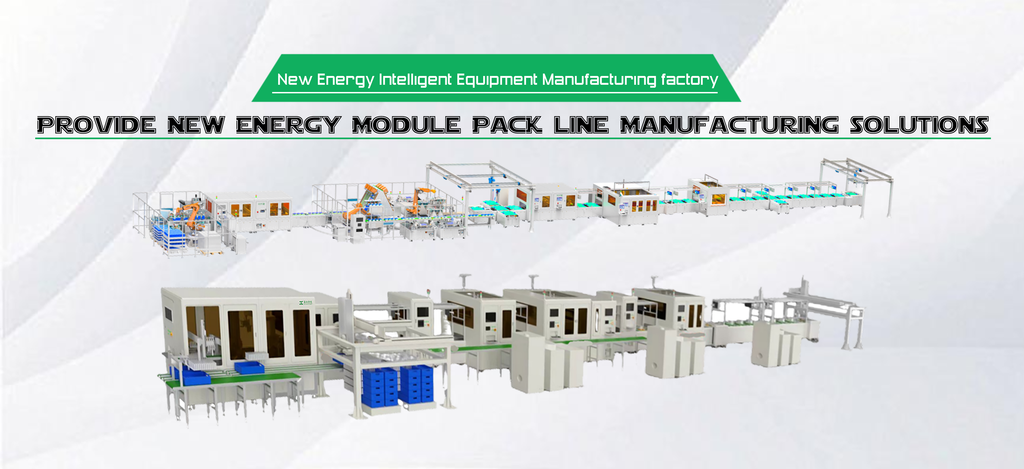
What Does Changeover Time Include?
Changeover is often reported as a single duration, but it can include several distinct stages. For a module PACK line, the interval between the last good unit of one product and the first good unit of the next may include mechanical adjustments, software changes, verification, and ramp-up.
Mechanical changeover
Operators may need to replace fixtures, move locating pins, swap gripper jaws, or adjust tooling. Quick-change hardware can help, especially when it removes manual alignment and adjustment.
Software and recipe changes
The line may need a different program, product recipe, weld schedule, or inspection threshold. Stored recipes can make switching faster, but only if they have been validated on the actual equipment.
Verification
The first unit after a changeover is not necessarily a good unit. Vision systems may need adjustment, weld parameters may need confirmation, and the first module may require dimensional or electrical checks.
Verification time depends on the agreed quality requirements, so it should be considered as part of the changeover plan.
Ramp-up
Output may not return to its normal rate immediately after the first good unit. Operators may need to settle into the new process, and minor stops may be more frequent during the initial run.
A quoted changeover time may omit this ramp-up period. That can make the figure look shorter, so the measurement convention should state whether ramp-up is included.
How Should Changeover Time Be Measured?
The start and end points matter as much as the duration.
Some teams start timing at the stop command; others start at the last good unit or when the new fixture is picked up. The end point may be the first unit produced or the first unit that passes the required inspection.
For production planning, measuring from the last good unit of the previous product to the first fully accepted unit of the next is often more useful because it captures when conforming output resumes.
Ramp-up can be reported separately or included in the total. Either convention can work if it is written down and used consistently. Figures measured using different start and end points should not be compared directly.
Changeover time also varies by product pair, operator, shift, and tooling condition. Switching between similar module variants may take less time than changing between different cell formats. A single figure without the product pair provides limited information.
Which Parts of Changeover Can Be Improved Through Design?
Different parts of the changeover respond to different design choices.
Quick-change fixtures and locating systems
Fixtures that use fixed datums and secure clamping can reduce manual adjustment. The main benefit often comes from eliminating repeated alignment work, not from eliminating the fixture itself.
Stored recipes and parameter sets
A product recipe may include motion profiles, weld schedules, and inspection thresholds. Selecting a validated recipe can reduce manual parameter entry and help prevent setup errors.
Fixed references for vision systems
Vision systems can be retaught for each product or designed to use reference features shared across variants. Shared references may reduce setup work, though they can limit product design options.
First-part verification
A focused first-part check can confirm the characteristics most likely to change during a product switch. Repeating every end-of-line check may provide more verification than needed for changeover, but the required checks should be set by the project’s quality plan.
Standardized sequence and roles
A documented changeover sequence gives operators a repeatable process. It should define the task order, required tools, checks, and responsibilities.
What Does Flexibility Include Beyond Changeover?
Changeover time is only one measure of flexibility.
- Product range: The line’s practical range depends on cell format, module dimensions, welding access, and testing requirements. Variants within one module family may fit a line that cannot accommodate a different cell format.
- Volume turndown: A line designed for a high production rate may not run efficiently at much lower volumes. Station balance and operating method may need to change.
- Routing and redundancy: Duplicate stations can allow production to continue around equipment that is under maintenance. This affects uptime, even if it does not shorten changeover.
- Late customization: Moving product-specific work later in the process may reduce the number of finished variants that need to be held in inventory.
What Are the Trade-Offs of a Flexible Line?
Flexibility can require additional investment and space. Quick-change fixtures, extra stations, and buffers add to the initial line configuration. Recipe management, variant traceability, and routing logic also increase controls and commissioning requirements.
A multi-product line may have a lower peak rate on a specific product than a dedicated line. Compare the two configurations using the same product and acceptance criteria.
In some projects, the practical choice is to make mechanical changeover fast while keeping verification thorough. Shortening both stages may require more equipment or more extensive controls.
How to Specify Flexibility Before Ordering
Flexibility that is not documented may be difficult to verify after installation. Before ordering, agree on the following:
- Products and differences: List the module designs and compare cell format, dimensions, welding requirements, and testing scope.
- Changeover frequency: State how often products are expected to change. A line that changes once a month may need different provisions from one that changes several times per shift.
- Measurement convention: Define the start and end points, and state whether verification and ramp-up are included.
- Acceptance method: Identify the product pair, number of repetitions, and method used to demonstrate changeover performance.
- Growth path: List expected future products and identify what each may require.
A changeover target without a defined measurement convention is difficult to verify and can lead to disagreement.
Frequently Asked Questions
What is a reasonable changeover time for a PACK line?
There is no universal target. It depends on the product pair, fixture design, controls, and verification requirements.
The original draft notes that changeovers between similar module variants on a well-prepared line may fit within a single shift, while changes involving a different cell format may take longer. Treat these as general reference descriptions, not project commitments. Confirm the expected time for the specific products and line configuration.
Can changeover time be reduced after installation?
Often, some parts can be improved. Better fixtures may reduce mechanical work, and a more focused first-part check may reduce verification time.
Changes that require additional stations or a different layout are usually more costly after installation, so it is useful to consider them during project design.
Is a dedicated line better than a flexible line?
It depends on product volume and variety. A dedicated line may achieve a higher rate on one product; a flexible line may handle a wider product mix.
Where volumes are high and the product range is narrow, a dedicated configuration may be a better fit.
Does flexibility affect line rate?
It can. Buffers, duplicated stations, and changeover features require capital and floor space. A multi-product line may not reach the same peak rate as a dedicated line.
Compare rates on the same product and using the same acceptance basis.
How many products can one line handle?
There is no fixed limit. The practical range depends on how much the products differ and how much changeover time the production plan can tolerate.
A line handling many low-volume variants may need to prioritize repeatable changeovers over maximum rate.
How long does on-site installation and commissioning take?
The original estimates give approximately 7–10 days for a steel strip production line and around 30 days for other module lines. They also state that overseas projects are typically completed within one month on site.
These figures refer only to on-site installation and commissioning after the equipment has arrived and the site is ready. The overall delivery cycle depends on the project configuration and should be confirmed case by case.
Key Takeaways
- Changeover includes mechanical work, software switching, verification, and ramp-up.
- Changeover figures are comparable only when their start and end points are defined consistently.
- Quick-change fixtures can reduce adjustment work; stored recipes help when they are validated on the actual equipment.
- Flexibility also includes product range, volume turndown, routing options, and late customization.
- Flexibility can add hardware, floor space, controls scope, and commissioning work.
- Specify the product pair, measurement convention, and acceptance method before agreeing on a changeover target.
About Jialuo Intelligent
Shenzhen Jialuo Intelligent Technology Co., Ltd. was founded in 2008 and has focused on new energy automation since 2019. The company is a National High-Tech Enterprise and a Shenzhen Specialized, Refined, Differentiated and Innovative SME.
Jialuo Intelligent designs and builds lithium battery automation production lines, including battery module PACK lines, steel strip production lines, CCS automated production lines, and supporting equipment such as helium leak testing, sorting, and blue film wrapping machines.
Its solutions cover R&D, production, sales, and service. Capabilities include automated assembly, punching, bending and riveting, robotic handling, vision inspection and positioning, laser welding and cutting, AGV transport, insulation and withstand voltage testing, voltage and internal resistance testing, airtightness testing, and MES data integration. Production parameters can be uploaded to an MES system.
Address: No. 8, Kukeng Chengguang Industrial Park, Dabut Community, Guanlan Subdistrict, Longhua District, Shenzhen, China (Room 101, Building 2, 518100)
Email: jch@cnjialuo.com
Website: cnjialuo.com
Planning a Multi-Product PACK Line?
Start by listing the products the line must run, the differences that matter, and the expected changeover frequency. Then agree on how changeover will be measured and demonstrated at acceptance.
Share your module designs, cell formats, and target output for each product with our engineering team. We can outline which parts of changeover may be reduced through design and where flexibility may need to be balanced against line rate.
A multi-product battery module PACK line is easier to specify when the product range and measurement convention are clear.