
Cell sorting is a critical step between incoming cell inspection and battery module assembly.
It determines how individual cells are measured, classified, and grouped before they enter the module production process. The quality of this step can influence cell consistency within a module, production efficiency, and the reliability of downstream assembly.
A cell sorting machine does not improve the cells themselves. Its job is to measure selected parameters, identify differences, and classify cells according to predefined criteria.
The important question is not simply how accurately a machine can measure a cell. It is whether the sorting strategy matches the cell specification, module design, and production requirements.
This guide explains the key sorting parameters, how binning logic affects production, how cell format influences machine configuration, and what buyers should confirm before selecting a battery cell sorting machine.
It is written for process engineers, battery manufacturers, and procurement teams planning a battery module or PACK production line.
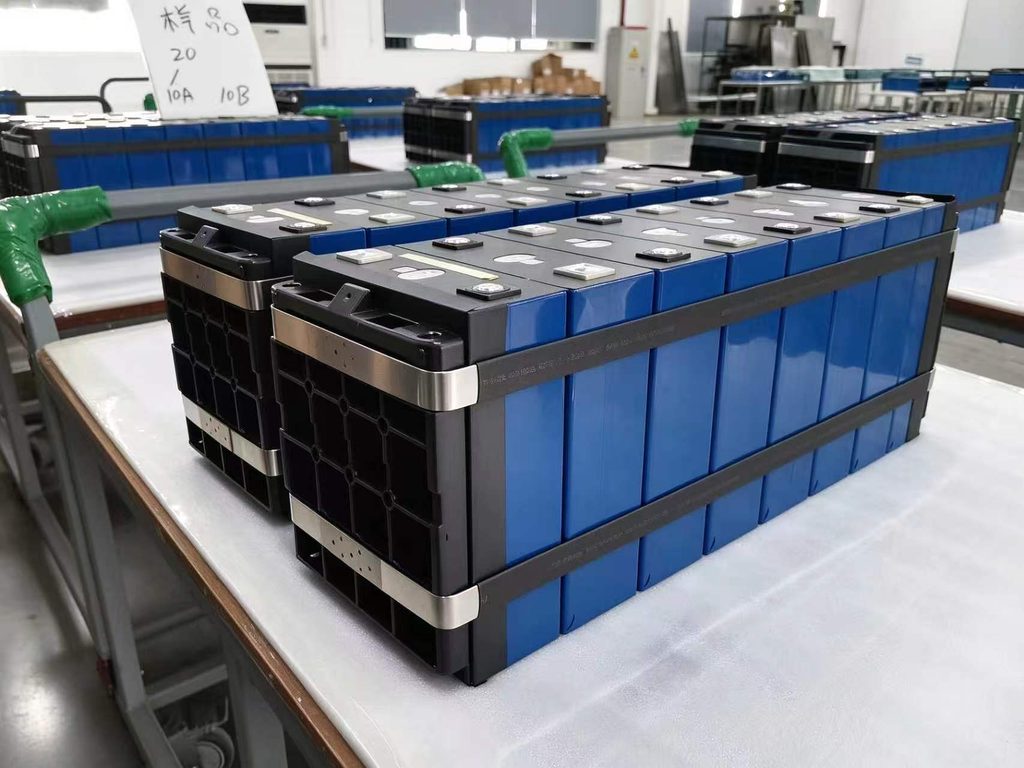
A sorting machine cannot make cells consistent. It can identify differences and classify cells so that the module assembly process can work with better-matched cells.
What Does Cell Sorting Do in Battery Module Production?
Cell sorting measures selected electrical parameters for each cell and assigns it to a predefined group, commonly referred to as a bin.
The sorted cells can then be supplied to downstream module assembly according to the module manufacturer’s matching strategy.
For example, cells with similar measured characteristics may be grouped together to help reduce performance differences within a module. The actual grouping method depends on the electrical design, series and parallel configuration, cell specifications, and production requirements.
Common sorting parameters include:
- Open circuit voltage (OCV)
- Internal resistance, typically ACIR or DCIR
- K value, where self-discharge screening is required
- Cell identification and traceability information
A typical automated sorting process may include:
- Cell loading and positioning
- Barcode or QR code reading
- OCV measurement
- Internal resistance measurement
- Optional contact-surface cleaning or other preparation
- Classification according to preset binning rules
- Automatic transfer to the assigned bin
- Data recording and cell unloading
The exact process depends on the cell format and machine configuration.
For buyers, the most important differences between sorting machines are measurement stability, sorting logic, handling capability, throughput, and data traceability.
Which Cell Sorting Parameters Actually Matter?
Not all sorting parameters serve the same purpose. The right combination depends on the cell chemistry, manufacturing history, module design, and quality requirements.
1. Open Circuit Voltage (OCV)
Open circuit voltage is one of the most commonly used parameters in battery cell sorting.
It measures the voltage of a cell when it is not under an applied load. The result can provide information about the cell’s state of charge at the time of measurement.
However, OCV alone does not tell the complete story.
Two cells may show similar voltage readings but have different charging histories or self-discharge characteristics. This is why OCV should be considered alongside other electrical parameters and controlled testing conditions.
A suitable rest period before measurement can help improve consistency. The required duration depends on the cell chemistry, formation process, storage conditions, and the cell supplier’s specifications.
For a production project, the rest period and OCV acceptance limits should be agreed between the cell supplier and the module manufacturer.
2. Internal Resistance: ACIR and DCIR
Internal resistance is another important parameter for evaluating cell consistency.
Cells with similar OCV values may still behave differently under load. Internal resistance measurement helps identify these differences.
There are two commonly used measurement methods:
ACIR (Alternating Current Internal Resistance)
ACIR is measured by applying an alternating current signal at a defined test frequency. It is relatively fast and is commonly used in automated cell sorting equipment.
It can be useful for comparing cells within a production batch, provided the measurement conditions are consistent.
DCIR (Direct Current Internal Resistance)
DCIR is measured using a direct-current method, typically by observing the voltage response to a defined current over a specified period.
It can provide information about cell behavior under a particular load condition, but the measurement process and calculation method differ from ACIR.
ACIR and DCIR values are not directly interchangeable. Their results depend on the test method, current, duration, temperature, and other conditions.
Before purchasing a sorting machine, buyers should confirm:
- Which resistance measurement method is required
- The applicable test frequency or current conditions
- The measurement range and resolution
- The required repeatability
- How the measurement will be verified against a reference instrument
The appropriate settings should be based on the cell specification and the module manufacturer’s quality requirements.
3. K Value and Self-Discharge Screening
K value is commonly used to describe voltage change over a defined period.
It can help identify cells with unusually high self-discharge, which may not be detected by a single OCV or internal resistance measurement.
A cell may pass an initial voltage and resistance check but still show abnormal voltage decline during storage.
This is why self-discharge screening can be valuable for applications with strict consistency requirements.
However, K value measurement requires controlled conditions and a defined observation period. Depending on the cell chemistry, testing method, and required resolution, the rest period may extend over several days.
For this reason, K value measurement is not necessarily performed on every cell in every production line. Some manufacturers use a separate aging or screening process, or apply K value testing to selected cells.
The testing duration, calculation method, and acceptance limits should be agreed with the cell supplier and confirmed in the project specification.
4. Capacity and Its Limits in Module-Plant Sorting
Capacity is an important indicator of battery cell performance, but capacity grading is usually completed during cell manufacturing.
Measuring capacity requires a charge and discharge process under defined conditions. If every cell must undergo this process inside a module plant, the sorting system will need additional equipment, testing time, space, and process management.
For this reason, capacity grading is often treated as a separate process rather than a standard function of an OCV sorting machine.
If capacity sorting is required at the module plant, buyers should specify it separately when defining the production process.
Why Sorting Resolution Matters More Than a Precision Claim
A sorting machine specification may highlight measurement precision or the number of digits displayed by the instrument.
These figures are useful, but they do not automatically indicate how effective the sorting process will be.
The actual sorting result depends heavily on the relationship between measurement repeatability, the distribution of incoming cells, and the bin width.
Consider two situations:
- If incoming cells have a narrow measurement distribution and the bin width is relatively wide, most cells may fall into only one or two bins.
- If incoming cells have a wider distribution and the bin width is very narrow, the machine may create many partially filled bins that are difficult to manage during module assembly.
More precise measurements do not necessarily create a better production outcome if the binning strategy is not suitable.
A practical approach is to measure a representative sample batch first, review the parameter distribution, and then establish appropriate bin widths.
This allows the sorting strategy to reflect actual incoming cell characteristics rather than relying only on theoretical instrument specifications.
Bin width should be defined according to the measured cell distribution and module requirements, not simply according to the resolution of the measuring instrument.
How Many Bins Should a Cell Sorting Machine Have?
The required number of bins depends on the cell distribution, module configuration, and production planning.
Many automated sorting systems allow binning levels to be configured through software. This provides flexibility when production requirements change.
However, more bins do not always mean better sorting.
A higher bin count may provide finer classification, but it can also create more partially filled groups. These groups may increase material handling, inventory management, and coordination requirements for downstream module assembly.
For example, a module design requiring a specific number of cells in each group needs a sorting strategy that can supply suitable quantities without creating excessive leftover cells.
Before defining the bin count, buyers should consider:
- The module’s series and parallel configuration
- The number of cells required per module
- The expected electrical parameter distribution
- The quantity of cells in each incoming batch
- How partially filled bins will be managed
- Whether binning rules need to change between products
A reference configuration may support software-configurable multi-level binning. However, the practical number of usable bins depends on the machine configuration and the production requirements.
The binning strategy should therefore be confirmed during the technical proposal stage.
How Does Cell Format Affect Sorting Machine Configuration?
Cylindrical, prismatic, and pouch cells require different mechanical handling methods.
Although the electrical measurement principles are broadly similar, the loading method, positioning system, contact arrangement, and achievable throughput can vary significantly.
Cylindrical Cell Sorting
<image_placeholder />
Cylindrical cells are generally handled through trays, carriers, or bulk-feeding arrangements.
Their rigid outer cans make automated positioning and handling relatively straightforward. However, different cylindrical cell sizes may require different fixtures or handling components.
A reference configuration for Jialuo cylindrical cell sorting equipment has a throughput of 30–40 PPM, with the 40135 cell format as the design basis.
The configuration is also designed to accommodate formats including:
- 21700
- 32700
- 4680
- 46120
Compatibility with these formats should be confirmed against the actual cell dimensions, handling method, and required changeover configuration.
Buyers should also ask whether format changes require fixture replacement, mechanical adjustment, or software parameter changes.
The quoted throughput should be evaluated against the complete process, including loading, measurement, sorting, and unloading.
Prismatic Cell OCV Sorting
<image_placeholder />
Prismatic cells are typically handled by their rigid body, with electrical contact made at designated measurement points.
Their dimensions and weight can affect positioning, transfer speed, and the design of the contact mechanism.
A reference configuration for Jialuo prismatic cell OCV sorting equipment has a throughput of 12 PPM.
The general configuration specifications include 40K+1NG or 80K+1NG, depending on the project requirements.
The meaning and applicability of these specifications should be defined in the technical proposal, together with the required bin count and cell dimensions.
Before finalizing the equipment configuration, buyers should provide the cell drawings and confirm the required sorting parameters.
Pouch Cell Sorting
<image_placeholder />
Pouch cells require a different handling approach because they do not have the same rigid outer structure as cylindrical or prismatic cells.
They are commonly supplied in trays, and the handling system must avoid unnecessary pressure, bending, or damage to the pouch surface.
A reference configuration for Jialuo pouch cell sorting equipment has a throughput of 12 PPM, with automatic destacking from stacked trays.
The general configuration specification is 40K+1NG.
Actual throughput and handling capability depend on pouch dimensions, tray design, loading conditions, and the required sorting process.
For this reason, buyers should provide the pouch cell drawings and tray information before the machine configuration is finalized.
What Should Be Specified Before Buying a Cell Sorting Machine?
A sorting machine quotation should be based on more than the cell format and target production speed.
The following six items provide a practical starting point for defining the technical requirements.
1. Cell format and dimensions
Specify whether the project uses cylindrical, prismatic, or pouch cells. Include the full dimensional range if multiple cell models will be used.
2. Required sorting parameters
Confirm whether the machine needs to measure OCV, ACIR, DCIR, K value, or other parameters. Define the required measurement ranges and acceptance limits.
3. Binning strategy
Provide the required bin widths, number of bins, and the rules for assigning cells. Where possible, share measured data from a representative cell batch.
4. Required throughput
Specify the target output per minute or per hour, together with the required bin count and testing conditions.
Throughput should be evaluated against the complete process rather than a single machine movement.
5. Data and traceability requirements
Define which cell information must be recorded, how the data should be stored, and whether it needs to be transferred to a manufacturing execution system (MES).
6. Loading, unloading, and acceptance criteria
Confirm the tray type, loading method, buffer capacity, and unloading arrangement. Also define how measurement repeatability and sorting accuracy will be tested during machine acceptance.
These details allow the equipment supplier to propose a configuration based on the actual production requirements.
Without them, a quotation may describe a machine’s general capabilities without fully addressing the customer’s production process.
How Should Cell Sorting Data Be Connected to MES?
Cell sorting generates important process data because each cell can be measured and assigned an individual sorting result.
However, the value of this data depends on whether it can be linked to the correct cell identity and used by downstream production processes.
A useful sorting record may include:
- Cell barcode or QR code
- Measurement timestamp
- OCV result
- Internal resistance result
- K value, if measured
- Assigned sorting bin
- Retest status and result, where applicable
- Relevant process or equipment status
Two details deserve particular attention.
First, barcode reading must work under actual production conditions.
A barcode reader that works reliably on a clean sample may not perform equally well on production cells with different surface conditions, printing quality, or code positions.
The reader should be tested using actual production samples at the required operating speed.
Second, the MES interface should be defined in detail.
Instead of simply requiring the machine to “support MES”, buyers should define the data fields, data types, communication method, and update timing.
A clearly defined interface can be tested during commissioning. A general MES requirement is much harder to verify.
The value of sorting data comes from its connection to an individual cell and its usefulness in downstream production—not simply from the volume of stored records.
Frequently Asked Questions About Battery Cell Sorting
Which sorting parameters are essential for a battery module production line?
OCV and internal resistance are common baseline parameters for cell sorting.
K value may also be required where self-discharge screening is part of the quality strategy. Capacity grading is often completed at the cell manufacturing stage rather than in the module plant.
The final combination should be determined by the cell specification and module design.
Is higher measurement precision always better?
Not necessarily.
Measurement precision is important, but the sorting result also depends on measurement repeatability, incoming cell distribution, and bin width.
The equipment should be evaluated based on whether it can consistently achieve the required sorting result under actual production conditions.
Can one sorting machine handle cylindrical and prismatic cells?
A machine designed for one cell format cannot automatically handle another format without changes to its mechanical handling system and loading arrangement.
A dual-format solution may be possible as a customized engineering project, but it should not be assumed to be a standard configuration.
The cell dimensions, contact method, tooling requirements, and throughput must all be evaluated.
How long does a cell need to rest before K value can be measured?
There is no single rest period that applies to every cell.
The required duration depends on the cell chemistry, testing method, and the level of self-discharge resolution required. Some applications may require several days of observation.
The testing conditions should be agreed with the cell supplier and confirmed in the project specification.
What causes a cell sorting machine to reject cells that are actually acceptable?
Potential causes include unstable probe contact, inconsistent testing conditions, insufficient rest time, barcode reading problems, or binning limits that do not match the incoming cell distribution.
A rejected result should be reviewed against both the cell specification and the equipment’s measurement conditions before the cell is classified as defective.
What information is needed to obtain a cell sorting machine quotation?
The main information includes:
- Cell format and dimensions
- Required sorting parameters and measurement ranges
- Bin count and binning rules
- Target throughput
- Loading and unloading method
- Data and MES requirements
- Measurement repeatability and acceptance criteria
Providing these details helps the equipment supplier prepare a more accurate technical configuration and quotation.
About Jialuo Intelligent
Shenzhen Jialuo Intelligent Technology Co., Ltd. was established in 2008 and has focused on new energy automation equipment since 2019.
The company designs and manufactures battery module PACK assembly lines, automatic battery module steel strap production lines, and CCS production lines, together with supporting equipment for helium leak testing, cell sorting, prismatic module semi-automatic welding, and blue film wrapping.
Jialuo provides cell sorting equipment for different battery formats, including:
- Cylindrical cell sorting: reference throughput of 30–40 PPM, with 40135 as the design basis and compatibility with selected cylindrical cell formats.
- Prismatic cell OCV sorting: reference throughput of 12 PPM.
- Pouch cell sorting: reference throughput of 12 PPM, with automatic tray destacking.
These figures refer to specific reference configurations. The final machine design and performance should be confirmed against the customer’s cell specifications and project requirements.
Jialuo holds National High-Tech Enterprise status (Certificate No. GR202544206903), is recognised as a Shenzhen municipal Specialized, Refined, Distinctive and Innovative SME, and operates under ISO 9001 and ISO 14001 management systems.
Planning a Cell Sorting Process for Your Battery Module Line?
The most useful starting point is to define three things:
- The cell format and dimensional range.
- The module configuration and cell-matching requirements.
- The electrical parameters that need to be measured and classified.
With these details, the sorting strategy can be developed around the actual cells and production process.
If you are planning a new battery module production line or upgrading an existing sorting process, Jialuo Intelligent can discuss the equipment configuration based on your project requirements.
Email: jch@cnjialuo.com
Website: www.cnjialuo.com
Shenzhen Jialuo Intelligent Technology Co., Ltd.
Room 101, Building 2, No. 8, Kengcheng Guanggu Industrial Park, Dafu Community, Guanlan Street, Longhua District, Shenzhen, China
Technical note: Throughput and configuration figures in this article are reference values for specific equipment configurations. Final specifications, compatibility, and acceptance criteria should be confirmed in the project technical proposal.