
A module PACK line quotation usually arrives as a table. A production rate here, a yield figure there, a changeover time at the bottom, and a price that depends on all of them.
For a buyer, the difficulty is that these numbers do not all mean the same thing. Some can be measured directly on the production floor. Others require technical documentation. A few cannot be properly verified until the line has been running under actual production conditions.
Treating them as equivalent figures is one reason why a quotation that initially looks competitive can become expensive after installation.
When evaluating a battery module PACK assembly line, buyers should look beyond the quoted price and headline production capacity. They need to understand what each figure represents, how it will be measured, and whether the supplier is prepared to make it part of the project acceptance criteria.
This article examines four groups of numbers commonly found in a module PACK line quotation, how buyers can verify them, and what should be clarified before signing an equipment purchase agreement.
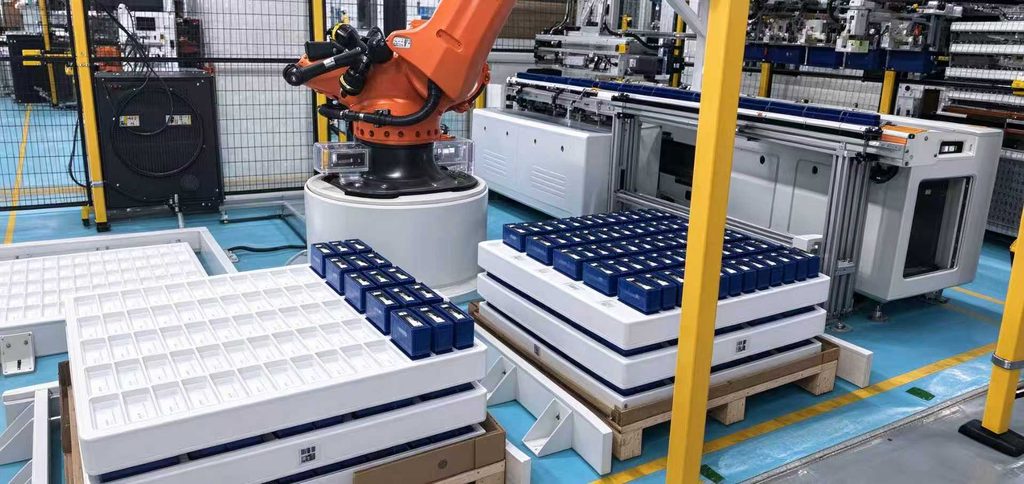
Why Is a PACK Line Quotation Harder to Evaluate Than a Single Machine Quotation?
A production line is not simply a collection of individual machines. It is a coordinated system in which each station affects the performance of the next.
A single machine quotation can often be evaluated through its cycle time, technical specifications, and footprint. A complete battery module PACK line is more complicated because its actual output depends on station coordination, material handling, buffer capacity, product configuration, and the level of automation.
The production rate of a module PACK line is closely related to the cell format, module structure, number of cells per module, and manufacturing process.
Changing any of these factors can affect the performance of the same equipment.
Important: Production rates, accuracy figures, and capacity estimates should always be evaluated against a defined product configuration. Reference figures from one project should not automatically be applied to another. The final performance targets should be confirmed in the project’s technical proposal.
What Are the Four Groups of Numbers Buyers Should Examine?
Four groups deserve particular attention:
- Line rate and takt time — How many modules can the line produce, and what cycle time does each station require?
- Yield and defect handling — What proportion of output meets quality requirements, where are defects detected, and how are rejected products handled?
- Changeover and flexibility — How long does it take to switch between product configurations, and which fixtures or machine settings need to change?
- Acceptance and service terms — How will equipment performance be verified, when does the warranty begin, and what does commissioning include?
The first group is usually visible in the quotation. The other three often require additional clarification.
That is where buyers should spend more time before placing an order.
Group One: Line Rate and Takt Time
Production capacity is usually the first number buyers look at when comparing equipment suppliers.
However, a quoted production rate is meaningful only when the product and operating conditions behind it are clearly defined.
For example, a prismatic battery module PACK line may be designed around a particular cell capacity, module structure, and assembly sequence. A different module configuration may require additional handling, positioning, welding, or inspection time.
The same principle applies to cylindrical and pouch-cell production lines. Different cell formats require different handling methods and process arrangements, so their production rates should not be compared directly.
What Should Buyers Ask About the Production Rate?
There are three important questions.
1. What product configuration was used to calculate the production rate?
Ask the supplier to identify the cell format, cell dimensions, number of cells per module, module structure, and intended process route.
Without this information, a production rate is difficult to evaluate.
2. Does the quoted rate include handling and inspection time?
A production rate calculated from individual machine cycle times may not reflect the actual output of the complete line.
Material transfer, positioning, loading and unloading, inspection, and operator intervention can all affect the final production rate.
Buyers should ask whether the quoted figure represents an individual station’s theoretical capacity or the expected output of the complete production line.
3. How many operators are required?
A semi-automatic line and a fully automatic line can have very different staffing requirements, even when their production rates appear similar.
The quotation should identify the assumed operator model and clarify which operations require manual intervention.
Is a Higher Production Rate Always Better?
Not necessarily.
A line designed for significantly higher capacity than the factory actually needs may increase the initial investment without delivering a corresponding improvement in operating efficiency.
There is also a difference between theoretical capacity and sustainable production output.
For most projects, the more useful figure is the production rate that the line can consistently achieve with the buyer’s actual product mix, staffing model, and operating conditions.
The objective is not simply to purchase the fastest line. It is to purchase a line that meets production targets reliably.
Group Two: Yield and Defect Handling
Production rate tells buyers how quickly a line can operate. Yield tells them how much of that output meets the required quality standards.
These two figures should always be evaluated together.
A supplier may quote an attractive yield percentage, but the figure is difficult to assess without knowing where it is measured and what is included in the calculation.
For a battery module PACK line, different processes may have different quality requirements.
For example:
- Cell sorting and consistency checks
- Cell positioning and stacking
- Busbar and terminal welding
- Module insulation and electrical testing
- Final inspection and end-of-line testing
Each process has its own potential failure points.
How Should Buyers Verify Yield?
Start by agreeing on three things.
The measurement point
Is the yield measured after an individual station, after a major process section, or at the end of the complete production line?
These figures represent different things and should not be treated as interchangeable.
The sample size and measurement period
A short demonstration run may not provide enough information to evaluate actual production performance.
Buyers should agree on the number of products tested and the operating period used to calculate the result.
The treatment of rejected products
A product that can be reworked is not the same as one that must be scrapped.
The acceptance criteria should clarify how reworked products, rejected products, and products requiring additional inspection are counted.
Important: Yield depends on incoming material quality, product design, process parameters, equipment configuration, and operator practices. A yield figure from one project should not be transferred to another without checking the underlying conditions.
Why Can Yield Matter More Than Production Rate?
Consider two production lines.
Line A has a higher theoretical production rate but experiences more quality-related interruptions and rejected products.
Line B operates at a slightly lower rate but delivers a higher proportion of qualified modules.
The second line may produce more good modules over a complete production shift.
This is why production rate and yield should be evaluated together.
A quotation that provides a production rate without explaining its quality assumptions does not give buyers enough information to estimate actual production output.
Group Three: Changeover and Production Flexibility
Changeover is one of the most frequently misunderstood items in a battery module PACK line quotation.
A supplier may describe a line as flexible or suitable for multiple product configurations. However, these descriptions do not explain how much work is required when the product changes.
In practice, changeover can involve several different operations:
- Replacing or adjusting fixtures and positioning components
- Changing grippers and handling components
- Loading different product parameters
- Adjusting welding positions and process settings
- Updating inspection programs
- Verifying the first qualified product after changeover
The time required depends on the differences between the products and the equipment design.
A change between two similar module configurations may be relatively straightforward. A change involving different cell dimensions, module structures, or manufacturing processes may require additional mechanical adjustments.
What Should Buyers Clarify About Changeover?
Three questions are particularly important.
1. Which components need to be replaced?
Ask whether the line requires fixture replacement, mechanical adjustment, or only software parameter changes.
This helps buyers understand the actual flexibility of the equipment.
2. Are production parameters pre-stored?
For multi-product manufacturing, a well-designed control system can store different product recipes and allow operators to select the corresponding configuration.
This can reduce repeated manual parameter adjustments and improve changeover consistency.
3. How is changeover time measured?
The measurement method matters.
Does the quoted time start when the last qualified product of the previous model leaves the line, or when the machine stops?
Does it end when the machine restarts, or when the first qualified product of the new model is completed?
These are different measurement methods and can produce significantly different results.
Is Changeover Important If the Factory Only Produces One Product?
It can still be important.
Battery manufacturers may introduce new module specifications as product demand changes. A line designed around only one fixed configuration may become a limitation when the factory expands its product range.
Changeover flexibility also reflects the overall equipment design.
Standardized interfaces, adjustable tooling, stored production recipes, and accessible maintenance points can make a line easier to operate and maintain over its service life.
For buyers planning long-term production, flexibility should be evaluated as part of the initial equipment investment rather than treated as an optional feature.
Group Four: Acceptance and Service Terms
The first three groups describe what the equipment is expected to achieve.
The fourth group determines how those expectations are verified and what happens if the equipment does not meet the agreed requirements.
Three items deserve particular attention:
- Equipment acceptance procedures
- Warranty period and starting point
- Installation and commissioning scope
These terms should be clarified before the purchase agreement is finalized.
What Should Buyers Know About the Warranty?
A warranty period alone does not provide a complete picture of after-sales support.
Buyers should clarify:
- The warranty duration
- The date on which the warranty begins
- Which equipment components are covered
- How technical support is provided
- Whether replacement parts are included or charged separately
- What happens when a fault requires on-site service
The warranty start date is particularly important.
For example, a warranty starting from equipment shipment is different from one starting after final commissioning and acceptance at the customer’s factory.
Both the duration and the starting point should be clearly stated in the agreement.
Why Should Commissioning Be Discussed Separately From Delivery?
Equipment delivery and equipment commissioning are two different project stages.
Delivery covers the manufacturing and transportation arrangements required to bring the equipment to the customer’s factory.
Commissioning involves installation, mechanical and electrical checks, parameter adjustment, process debugging, and production verification.
The commissioning schedule may depend on several factors:
- Whether the factory foundation and utilities are ready
- Whether installation space is available
- Whether the customer’s cells and other production materials are prepared
- Whether the required operators are available for training
- Whether the agreed production and acceptance conditions have been met
A commissioning period should therefore be evaluated against the actual project scope and site conditions.
For overseas projects, buyers should also clarify the division of responsibilities between the equipment supplier and the local installation team.
What Should Be Included in the Acceptance Clause?
The acceptance procedure should define how the performance figures in the first three groups will be measured.
For production rate, specify the product configuration, operating duration, and staffing assumptions.
For yield, specify the measurement point, sample size, and treatment of rejected or reworked products.
For changeover, specify the starting point, ending point, and exact scope of the product change.
The more clearly these requirements are documented, the easier it is for both parties to evaluate the equipment objectively.
A performance figure that appears in a quotation but has no corresponding measurement method in the acceptance agreement may be difficult to verify or enforce later.
How Should Buyers Verify These Numbers Before Signing?
A practical evaluation process can be divided into three stages.
Stage 1: Request a Written Technical Breakdown
Before comparing quotations, ask each supplier to provide a clear breakdown of:
- Production rate and individual station cycle times
- Product specifications used for capacity calculations
- Expected yield and its measurement points
- Changeover scope and operating procedures
- Required operators
- Installation and commissioning arrangements
- Acceptance criteria and warranty terms
This makes it easier to identify differences between suppliers and understand what is actually included in each quotation.
Stage 2: Request a Reference Visit or Sample Production Run
If possible, visit an existing production site or arrange a sample run using production-representative materials.
A demonstration using specially prepared samples may not reflect the conditions that the equipment will encounter during normal manufacturing.
For battery module PACK equipment, using the customer’s actual cells, module components, and relevant production materials can provide a more meaningful evaluation.
Stage 3: Conduct a Factory Acceptance Test
A Factory Acceptance Test (FAT) should be conducted against the agreed technical specifications and acceptance criteria.
The test should define:
- The product configuration
- The production process
- The operating conditions
- The required production rate
- The quality inspection requirements
- The test duration
- The acceptance method
For overseas projects, completing as much testing and pre-commissioning as possible at the equipment supplier’s factory can also help reduce installation and debugging work at the customer’s site.
What Is the Most Common Mistake When Comparing Quotations?
Accepting a total production figure without understanding how it was calculated.
A quoted production rate alone cannot explain why a line may fail to achieve its expected output.
A breakdown of station cycle times, material handling, operator involvement, and equipment availability provides a much more useful basis for evaluation.
The same principle applies to yield, changeover, and commissioning.
A good quotation should explain not only what the equipment is expected to achieve, but also the conditions under which those results can be achieved.
Final Thoughts: Compare the Production Capability, Not Just the Quoted Price
When evaluating a module PACK line quotation, four groups of numbers deserve particular attention.
Line rate needs a clearly defined product and operating basis.
Yield needs a measurement point and an agreed method of counting defects.
Changeover needs a defined scope and measurement method.
Acceptance and service terms determine how equipment performance is verified and supported after delivery.
These figures should not be treated as isolated promises in a quotation table. They are connected parts of the production system and should be evaluated together.
Before comparing suppliers, ask one practical question about every important figure:
How will we verify this during equipment acceptance?
If a supplier can explain the measurement method, the operating conditions, and the acceptance criteria behind its figures, buyers have a much stronger basis for making an investment decision.
At Shenzhen Jialuo Intelligent Technology, we work with battery manufacturers to develop module PACK assembly lines based on their cell specifications, module structures, production targets, and automation requirements.
If you are evaluating a new battery module PACK line or planning to upgrade an existing production facility, sharing your cell specifications, module drawings, target capacity, and expected automation level is a practical starting point for a technical discussion.
About Shenzhen Jialuo Intelligent
Shenzhen Jialuo Intelligent Technology Co., Ltd. was established in 2008 and has focused on new energy battery module equipment since 2019.
Our equipment portfolio covers three main areas: battery module PACK assembly lines, automatic battery module steel strapping lines, and CCS integration busbar production lines.
We also provide supporting equipment, including cell sorting machines, semi-automatic cell blue film wrapping machines, semi-automatic module welding lines, and integrated cap testing machines combining helium leak detection, electrical performance testing, and film application.
Jialuo is a National High-Tech Enterprise (GR202544206903) and a Shenzhen Specialized and Sophisticated SME, with ISO 9001 and ISO 14001 certifications.
Equipment is assembled and pre-commissioned at our Shenzhen facility before shipment, allowing key equipment functions and processes to be checked before delivery to the customer’s factory.
Looking for a battery module PACK line solution?
Contact our team to discuss your project requirements.
Email: jch@cnjialuo.com
Website: https://www.cnjialuo.com