
Choosing an automated battery module PACK line often starts with a request for quotation. When proposals arrive with different configurations and assumptions, comparing them can be difficult.
The problem is often not a lack of information, but a lack of shared assumptions. A PACK line is configured around three key inputs: the product mix, the required output, and the condition of incoming materials. Define these in writing, and supplier proposals become easier to compare. Leave them open, and each supplier may quote a different interpretation of the project.
This checklist helps turn open questions into defined requirements that can later be included in a technical agreement. It does not select a supplier; it gives every supplier the same basis for responding.
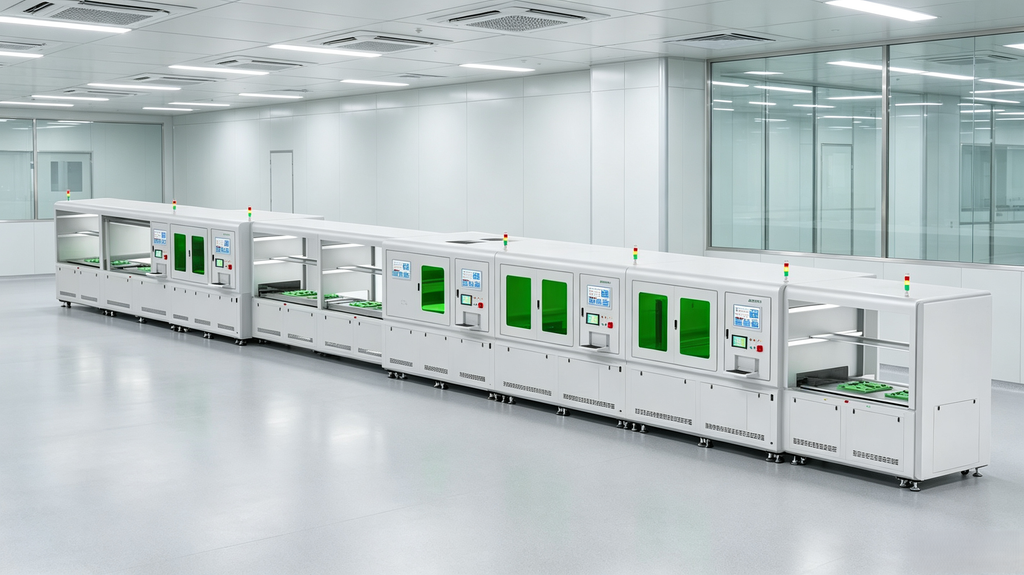
Why Use a Checklist Before Comparing Quotes?
A quotation answers the request it receives. If the request is broad, the proposal may be too.
For example, “an automated PACK line with a cycle time of 15 PPM” leaves several questions unanswered:
- Is the line designed for prismatic, cylindrical, or pouch cells?
- What module dimensions and weight must it accommodate?
- Are cell testing and sorting included?
- Where are inspection points required?
- How many models must the line handle, and how often will it change over?
Different answers can lead to very different line configurations.
For reference, one configuration may achieve approximately 12–15 PPM for a prismatic cell module line or 30–40 PPM for a cylindrical cell module line. Pouch cell line rates depend on the cell specification and process route and should be assessed for the project.
These are reference values, not guarantees. Confirm the final rate, station count, and acceptance criteria against the product design, incoming material conditions, and technical proposal.
1. Define the Product Mix
The product mix is the first major input, but it is often described too briefly.
Cell format and module dimensions
Prismatic, cylindrical, and pouch cells have different positioning, joining, and inspection requirements. A line designed around one format may require significant changes to handle another.
Module dimensions and weight matter too. Provide the minimum and maximum length, width, and height, along with the maximum module weight. These values affect fixture travel, robot payload, and whether tooling can be reused.
Number of models and changeover frequency
A line running one model continuously may need a different design from a line rotating among many models. A broader product mix affects tooling, recipe management, and operator workflow.
State the expected number of models in the first year and, if known, the planned range by the third year. This helps determine how much flexibility to build into the line from the start.
Dimensional ranges and future products
Give dimensional ranges rather than nominal values alone. A line designed only around today’s dimensions may require rework when the product changes.
If the product roadmap is still developing, ask suppliers to compare a configuration optimized for the current model with one that can accommodate the planned range.
2. Turn the Output Target into a Line Requirement
Annual capacity is an outcome, not a line parameter. To establish a useful production target, define the operating conditions behind it.
Working days and shifts
Convert annual demand into daily output using the planned number of working days. Then determine the required output per shift based on the shift pattern.
A single-shift and a two-shift plan may call for different station counts, buffers, and levels of automation. State the shift pattern and planned maintenance windows explicitly.
Net available production time
Define the time available for production after accounting for activities such as line clearing, changeovers, maintenance, and unplanned stops.
If this basis is unclear, the cycle time requirement may reflect assumptions that do not match actual shop-floor conditions. A planning assumption can be used during quotation, then verified during acceptance.
Yield basis
Specify whether output means units started or good units completed. Also clarify whether reworked units count as first-pass output.
These definitions can produce different results from the same production run, so they should be written into the acceptance criteria.
3. Define the Process Scope Before Pricing
The process chain determines the station layout. Defining it early reduces the chance of comparing proposals with different scope.
A PACK line may include cell height measurement, OCV sorting, pairing, stacking and compression, polarity checking, laser cleaning, busbar welding, electrical testing, and pack assembly. Not every project requires every step.
For each process, state whether it is included in the supplier’s scope, handled manually, or supplied by a third party.
Select joining processes
Laser welding, ultrasonic welding, and pulse hot riveting may suit different materials and quality requirements. Selection depends on the joint design, required mechanical and electrical performance, and available inspection methods. Sample validation may help before the line configuration is finalized.
Agree on inspection points
Inspection can take place after individual joining steps or before final assembly. Earlier checks may catch defects sooner, while the layout and process sequence may limit where inspection equipment can go.
Agree on inspection locations together with the acceptance criteria. The two determine what production data will be available for review.
4. Specify Changeover Requirements
Changeover turns flexibility into a measurable production and cost factor.
- Tooling reuse: If fixtures share a common base plate, a changeover may require replacing only the locating elements. Otherwise, more of the tooling may need to be removed and reinstalled.
- Locating adjustments: Adjustable locating pins can reduce the need for realignment, provided their adjustment range covers the dimensional extremes of the products.
- Robot and vision changes: If robot paths or vision programs need to be retaught, changeover time may depend on operator experience. State whether re-teaching is required and how it will be measured.
- Timing convention: Define the start and end points for changeover time. Timing from the stop command may produce a different result from timing between the last good unit of one model and the first good unit of the next.
5. Describe Incoming Material Variation
Incoming material condition is a key input that is often omitted. The supplier needs to understand the variation in the material, not only its nominal specifications.
Relevant data may include cell height tolerance, tab position deviation, case flatness, and batch-to-batch consistency. These factors affect how much variation the line must accommodate.
If incoming variation exceeds the line’s design range, acceptance results may reflect the material condition as well as the line’s performance. Consider providing recent process capability data and the incoming inspection specification so the supplier can size the compensation range against actual conditions.
6. Agree on Acceptance and Commissioning
Acceptance turns the technical proposal into measurable commitments. Define these items before the test:
- Test duration and shift count: A single shift may reveal basic issues; consecutive shifts provide more information about stability. Agree on a duration suited to the project.
- Downtime attribution: Define how equipment faults, material issues, operator actions, and utility interruptions will be classified.
- Data recording and sign-off: Identify who records the results, who reviews anomalies, and who approves the outcome.
- Commissioning period: The original estimates give approximately 7–10 days for a domestic steel strap production line and around 30 days for other module lines. Overseas on-site work is described as typically taking up to one month. Confirm the project schedule against line scope and site readiness.
Commissioning time is not the same as equipment manufacturing lead time. Quote and schedule them separately.
A One-Page PACK Line Checklist
Use these six groups to organize the first technical discussion:
- Product: Cell format, module dimensional ranges, model count, annual demand, and shift pattern.
- Output: Required shift output, net available time assumptions, and yield basis.
- Process: Process sequence, scope boundaries, joining method, inspection points, and main equipment.
- Flexibility: Changeover target and timing method, tooling reuse, locating adjustments, and re-teaching requirements.
- Data: Required parameters, traceability level, interface format, and local data buffering during network interruptions.
- Delivery and acceptance: Commissioning schedule, acceptance criteria, retest process, and spare parts approach.
When suppliers respond to the same checklist, their proposals are easier to compare. Any items that remain vague are also easier to identify for follow-up.
Frequently Asked Questions
How long does it take to configure a PACK line?
The timing depends on how much project information is available. A defined product mix, output target, and incoming material profile can help suppliers prepare a proposal more directly. If these inputs are still changing, the proposal may need several revisions.
Can one line handle both prismatic and cylindrical cells?
A line can be designed for multiple cell formats, but the additional positioning, tooling, and inspection requirements may affect cost and cycle time. Whether this is practical depends on the expected volume of each format and how often production changes between them.
Is a higher PPM figure always better?
PPM is only one indicator. Actual output also depends on available production time, changeover frequency, product mix, and yield. Review PPM together with the shift output and the conditions under which the rate was measured.
What documents are useful at the first technical meeting?
Product drawings or samples for two or three representative models, the incoming inspection specification, the annual output target, and the planned shift pattern are useful starting points. More detail can be added as the project develops.
About Jialuo Intelligent
Shenzhen Jialuo Intelligent Technology Co., Ltd. was established in 2008 and has focused on new energy automation since 2019. The company is a National High-Tech Enterprise and a Shenzhen Specialized and New SME. It holds high-tech enterprise certificate GR202544206903. Its management systems are certified to ISO 9001 and ISO 14001, and relevant products carry CE and UL certifications.
The company designs and manufactures lithium battery automation equipment, including:
- Battery module PACK lines
- Steel strap production lines
- CCS (Cell Contact System) production lines
- Helium leak testing equipment
- Cell sorting machines
- Module welding lines
- Blue film wrapping machines
PACK line configurations are commonly organized by cell format. Reference rates are approximately 12–15 PPM for prismatic cell module lines and 30–40 PPM for cylindrical cell module lines. Pouch cell line rates depend on the cell specification and process route.
These figures apply to specific reference configurations. Confirm the final cycle time, station count, and acceptance values against the customer’s product structure, incoming material conditions, and project technical proposal.
Planning a PACK Line?
Start by documenting the product mix, output target, and incoming material conditions. A short project brief covering these three inputs can reduce clarification rounds and help suppliers prepare comparable proposals.
Shenzhen Jialuo Intelligent Technology Co., Ltd.
Address: No. 101, Building 2, Kukeng Chengguang Industrial Park, Dafu Community, Guanlan Street, Longhua District, Shenzhen, China
Email: jch@cnjialuo.com
The information in this article is for general reference. Confirm configuration details and performance figures in the project technical proposal.