
Where Variation Enters the Process and How to Control It
A battery module strap may look like a simple component: a steel strip that is punched, bent, and welded, with a heat-shrink sleeve covering part of its length.
The challenge is not simply producing the required shape. A battery module may contain multiple straps, and those parts need to meet consistent dimensional and functional requirements.

Small variations in length, bend angle, joint strength, or sleeve position may affect downstream assembly. These issues may not be obvious immediately, and their causes can sometimes be traced back to an earlier manufacturing stage.
For this reason, process consistency is a key consideration when selecting a steel strip forming line for battery module manufacturing.
This article explains where variation can enter the process, which production and inspection stages help control it, and what buyers should specify before placing an equipment order.
1. Why Does Consistency Matter as Much as Output?
A strap that falls outside a critical tolerance may not stop a module from being assembled. Instead, it may cause less obvious problems.
For example, dimensional variation may affect how a strap fits against the module structure, how contact is established, or how a downstream station picks and positions the component.
These effects may appear later in the manufacturing process and may initially be attributed to another operation.
Production speed is often the first topic discussed during equipment selection. However, dimensional repeatability and functional quality should also be defined in the technical agreement.
Output may sometimes be increased by adjusting operating schedules or adding shifts. Consistency, on the other hand, depends on the machine, tooling, incoming material, process parameters, and operating conditions working together.
A reliable evaluation should therefore consider both the target production rate and the measurable quality requirements of the finished strap.
2. Where Does Variation Enter a Steel Strip Production Line?
Variation rarely originates from a single station. It can enter at several stages, and each process may either control it or pass it on to the next operation.
2.1 How Does Coil Material Variation Affect the Process?
Steel strip arrives as coiled material. Depending on the supplier and material specifications, it may vary in thickness, width, flatness, and surface condition.
A decoiling and leveling section can help reduce coil set and crossbow, but it cannot eliminate every variation in the incoming material.
Incoming material specifications are therefore just as important as machine accuracy.
If the incoming material tolerance is wider than the range required by the finished component, the production line may struggle to achieve the desired result consistently.
Before ordering equipment, buyers should confirm the material grade, thickness range, width range, dimensional tolerances, and relevant surface requirements. The equipment configuration should be evaluated against those conditions.
2.2 What Happens During Punching and Blanking?
Punching and blanking establish the hole pattern, edge condition, and part dimensions that may serve as references for later operations.
As punches and dies wear during production, the edge condition may change and burr height may increase. Tool wear is gradual, so a machine that meets the required dimensions during initial testing may need maintenance to maintain those results over time.
For this reason, tool inspection and maintenance intervals deserve attention alongside the initial accuracy specification.
A suitable inspection plan may include dimensional checks after forming to identify process drift before it affects a larger batch.
The specific dimensions to monitor should be selected according to the component drawing and the features that are critical to assembly.
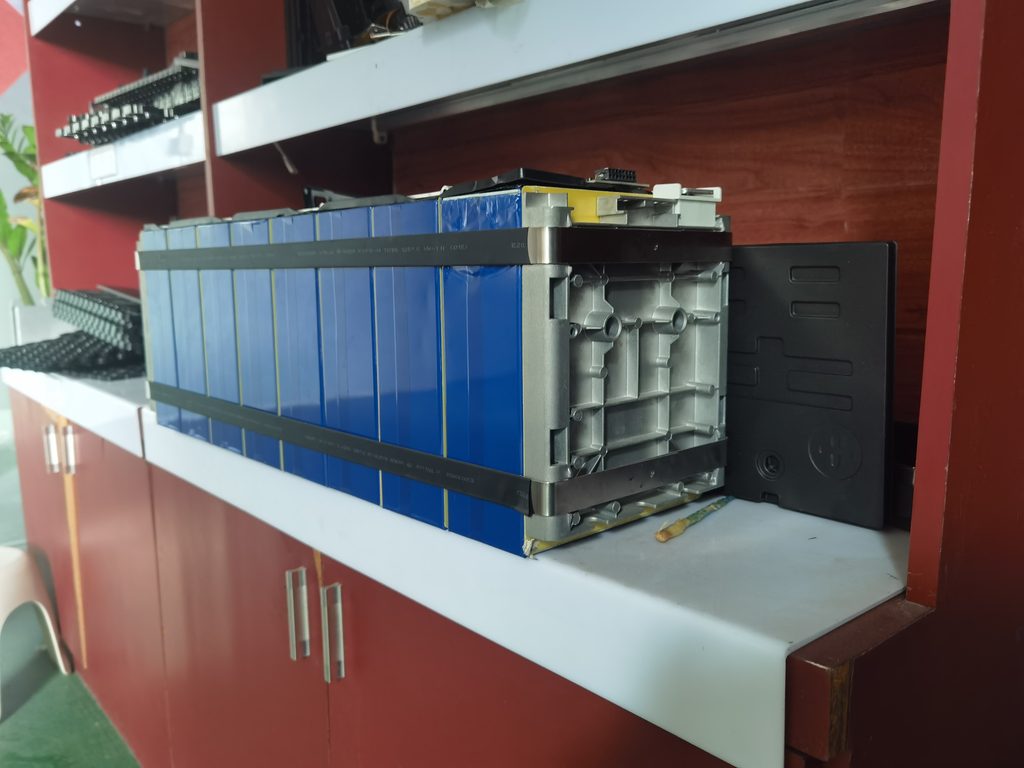
2.3 Why Does the Sleeve and Heat-Shrink Stage Matter?
The heat-shrink sleeve provides insulation or protection in the areas specified by the module design.
The result depends on factors such as sleeve position, heating temperature, dwell time, and cooling conditions. If these parameters are not adequately controlled, the sleeve may wrinkle, shift, shrink unevenly, or fail to seat properly at the end.
Sleeve position and appearance may also be checked during incoming inspection or subsequent assembly, even when an apparent defect has not yet caused an electrical failure.
A consistent process should define the required sleeve position and appearance, the applicable heating conditions, and the inspection method.
The exact requirements depend on the sleeve material, component geometry, and insulation specification.
2.4 Where Can Bending and Welding Introduce Variation?
Bending establishes the final geometry of the strap, while welding joins the specified ends or connection points.
Both operations may introduce variation if their process conditions are not adequately controlled.
During bending, springback can affect the final angle and shape. During welding, electrode wear, joint fit, or changes in process conditions may influence the resulting connection.
A reference configuration may use controlled feeding and bending axes, with position monitoring to support repeatability.
However, the acceptable deviation of a bent and welded strap depends on the module design, available contact area, connection structure, and assembly sequence.
The required tolerances should be defined in the project technical proposal and linked to the functional dimensions on the component drawing. A general accuracy figure should not be treated as a universal acceptance standard.
2.5 What Should the Inspection Stage Verify?
Inspection should do more than serve as a final checkpoint. It should provide measurable evidence that the finished component meets its requirements.
Different inspection methods answer different questions:
- Dimensional inspection checks features such as length, width, hole position, and bend geometry.
- Insulation and withstand voltage testing checks specified electrical insulation requirements.
- Pull testing evaluates joint strength under a defined test method.
These checks are complementary. A strap may meet its dimensional requirements but still fail an electrical test if the sleeve is damaged or an edge is exposed. A welded joint may also appear acceptable visually but fail a mechanical strength test.
Used together where appropriate, these methods can turn a general claim of consistency into measurable quality results.
The final inspection scope should be determined by the product design, customer requirements, and agreed acceptance criteria.
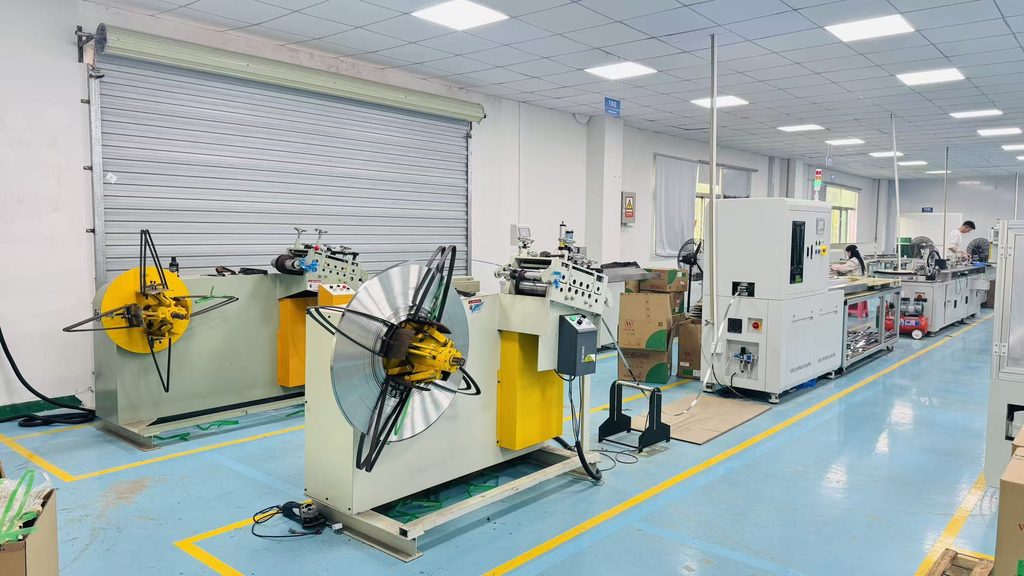
3. How Can Process Consistency Be Measured?
A supplier statement such as “high consistency” is difficult to evaluate without a defined measurement plan.
For a steel strip forming line, three groups of measurements are particularly relevant: dimensional accuracy, joint strength, and electrical insulation performance.
3.1 Which Dimensions Should Be Specified?
Common dimensions include:
- Overall strap length and width.
- Hole position and hole-to-hole distance.
- Bend angle and bend position.
- Flatness or the geometry of functional contact surfaces, where applicable.
Depending on the module design, the critical dimension may be the distance between two contact features or the flatness of a surface that sits against another component.
The drawing should distinguish functional dimensions from reference dimensions. A component may meet many dimensional requirements and still fail to assemble correctly if a critical feature is outside tolerance.
Buyers should identify the dimensions that directly affect fit, assembly, and performance before defining the inspection plan.
3.2 What Does a Pull Test Tell You?
A pull test evaluates the mechanical strength of a joint, while a dimensional inspection evaluates the geometry of the part.
Pull testing is commonly performed on samples because it is destructive. The result depends on the material, joint design, welding parameters, and test method.
For that reason, the sampling plan matters as much as the acceptance value.
A single sample result confirms the result for that sample under the specified test conditions. It does not, by itself, establish that every part produced during an entire shift will meet the same requirement.
The project specification should define the sampling frequency, test method, acceptance criteria, and recording requirements.
3.3 Why Include Insulation and Withstand Voltage Testing?
A strap that meets its dimensional requirements may still fail electrically if the sleeve is damaged, displaced, or insufficient to provide the specified insulation.
Insulation and withstand voltage testing can therefore form part of the quality-control plan where required by the product design.
For reference, a particular production configuration may combine dimensional checks, insulation and withstand voltage testing, and pull testing at defined intervals.
The exact test items, sampling frequency, and acceptance criteria must be confirmed according to the customer’s drawing and the project technical proposal.
4. What Parameters Should Be Confirmed Before Ordering?
Equipment dimensions and performance figures help determine whether a proposed line is suitable for the product and factory.
The following figures describe a reference configuration and should not be treated as universal specifications.
4.1 Reference Equipment Footprint and Product Range
| Parameter | Reference specification |
|---|---|
| Equipment length | Approximately 25–35 m |
| Equipment width | Approximately 3 m |
| Equipment height | Approximately 2.3 m |
| Compatible material width | Approximately 10–40 mm |
| Compatible material thickness | Approximately 0.5–2.0 mm |
| Strap width range | Approximately 105–540 mm |
| Strap length range | Approximately 200–2200 mm |
The final footprint and product range should be confirmed against the required strap design, material specifications, tooling configuration, and factory conditions.
Footprint deserves particular attention. A long production line may be constrained by the building layout as much as by the manufacturing process. Available space may determine whether the equipment is arranged in a straight line or requires a different layout.
Buyers should also account for material loading and unloading, operator access, maintenance clearance, and the movement of finished components.
4.2 Reference Motion and Welding Parameters
| Parameter | Reference specification |
|---|---|
| Feeding speed | Approximately 0–400 mm/s |
| Feeding accuracy | Approximately ±0.2 mm |
| Bending accuracy | Approximately ±0.1° |
| Single-point welding time | Approximately 3 s |
| Welder rating | Approximately 180 kVA |
These figures may vary with strap dimensions, material properties, module design, tooling, and required production output.
For example, a stated feeding accuracy does not automatically mean that every finished strap dimension will achieve the same tolerance. The final result also depends on material variation, tooling, bending springback, welding, and the measurement method.
The final speed, accuracy, and welding capacity should therefore be confirmed in the project technical proposal, together with the applicable operating conditions and acceptance method.
5. How Should the Line Handle Changeovers Between Strap Sizes?
Manufacturers producing several battery module designs may need to change strap dimensions or component configurations on the same line.
A changeover may involve tooling adjustments, program selection, and a first-piece inspection before volume production resumes.
The cost of changeover is commonly measured in lost production time and scrap. Planning the tooling range around the expected product mix may help reduce unnecessary adjustments and improve flexibility.
If the product range is expected to expand, buyers should discuss supported dimensions and future changeover requirements during the proposal stage.
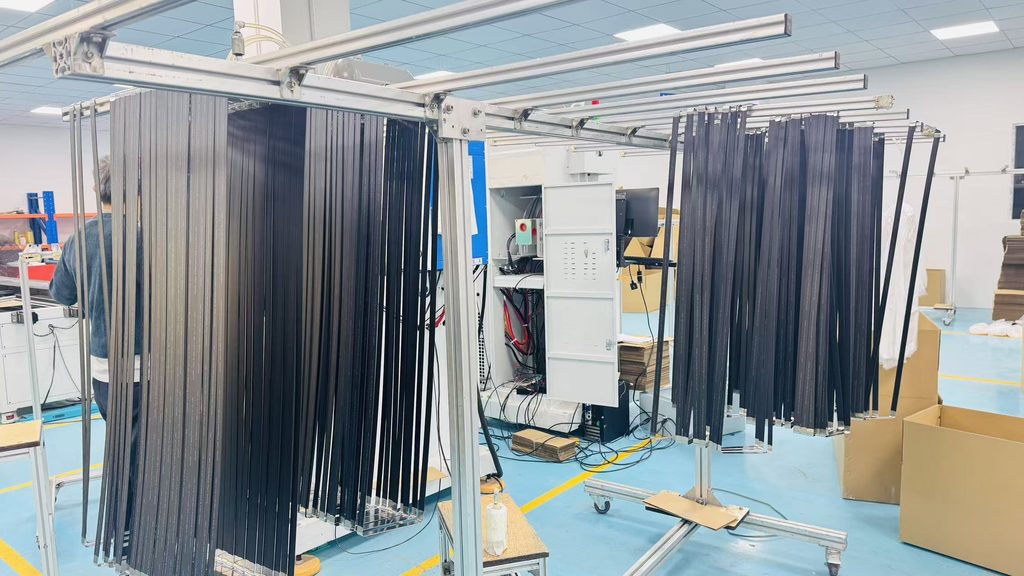
What Should Be Checked After a Changeover?
A first-piece inspection should confirm that the new settings match the component drawing before normal production resumes.
Depending on the product, the check may include:
- Critical functional dimensions.
- Hole positions and bend geometry.
- Sleeve position and appearance.
- A representative joint sample, where required.
The purpose is to verify the setup against the drawing and acceptance criteria before producing a larger batch.
A successful first piece is an important check, but ongoing process monitoring and the agreed sampling plan are still necessary for sustained production.
6. What On-Site Conditions Affect Consistency?
Machine specifications alone do not determine the final result. Conditions around the equipment may also affect performance.
Relevant factors can include:
- Floor flatness and foundation conditions: These may affect equipment installation and alignment.
- Power quality: Electrical supply conditions should meet the equipment requirements.
- Compressed air stability: Pneumatic equipment may require a specified pressure and air quality.
- Ambient temperature: Temperature changes may affect certain materials and process conditions.
- Nearby vibration: Vibration from adjacent equipment may be relevant to some long or precision-sensitive installations.
These conditions are not simply machine specifications, but they may influence whether the required process results can be achieved on site.
Before installation, the supplier and customer should confirm site readiness, utility requirements, foundation conditions, and any environmental requirements specified for the equipment.
7. Frequently Asked Questions
How Long Does On-Site Installation Usually Take?
Once the equipment has arrived and the site is ready, on-site installation and commissioning for a steel strip production line may take approximately 7–10 days under suitable conditions.
For other battery module production lines, the on-site period may be approximately 30 days for domestic projects. For overseas projects, the on-site period may typically be within one month.
These are indicative planning figures, not guaranteed schedules. The actual duration depends on the equipment configuration, site readiness, utilities, installation scope, and commissioning requirements.
These periods refer to on-site installation and commissioning only. The overall manufacturing and delivery schedule should be confirmed separately for each project.
Does Consistency Depend Only on the Machine?
No. Consistency depends on the machine, tooling, incoming material, process parameters, inspection plan, and operating discipline working together.
A precision machine may still produce inconsistent components if incoming material varies significantly or tool maintenance is deferred.
A complete quality plan should therefore address both equipment capability and the conditions under which the equipment operates.
Can a Line Be Adapted to a Different Strap Width Later?
It may be possible within the range supported by the original tooling and equipment design.
Changes beyond that range may require modifications to tooling, feeding systems, or control programs. The feasibility and cost depend on the new product dimensions and the existing line configuration.
If future product variants are expected, they should be discussed before the initial equipment design is finalized.
What Should Be Included in an Acceptance Run?
An acceptance run should define the sample quantity, measurement items, test methods, acceptance criteria, and recording format.
For example, the plan may include dimensional inspection and the applicable electrical or mechanical tests.
Producing parts during a trial confirms that the equipment can operate. Recorded measurements against agreed acceptance criteria provide the evidence needed to evaluate whether the line meets the specified requirements.
The acceptance plan should be agreed by the supplier and customer before the trial begins.
8. Key Takeaways
Process consistency in a steel strip forming line depends on more than the accuracy of a single machine.
- Incoming coil quality establishes the starting conditions for the process.
- Punching and blanking determine important dimensional features, while tool wear may affect quality over time.
- Sleeve positioning and heat-shrink conditions influence the insulation and appearance of the finished component.
- Bending and welding require process controls suited to the product design.
- Dimensional inspection, insulation and withstand voltage testing, and pull testing each evaluate different aspects of quality.
- A defined measurement and sampling plan makes consistency measurable.
- Changeover requirements and future product variants should be considered during equipment planning.
- Site conditions, utilities, and maintenance practices can influence whether the specified results are achieved.
The most practical starting point is to identify the functional dimensions, define the acceptance criteria, and ensure that the proposed line is designed around them.
About Jialuo Intelligent
Shenzhen Jialuo Intelligent Technology Co., Ltd. was founded in 2008 and has focused on new energy automation since 2019. The company is a National High-Tech Enterprise and a Shenzhen Specialized, Refined, Differentiated and Innovative SME.
Jialuo designs and builds lithium battery automation production lines, including battery module PACK lines, steel strip production lines, CCS automated production lines, and supporting equipment such as helium leak testing, cell sorting, and blue film wrapping machines.
Its engineering capabilities cover automated assembly, punching, bending and riveting, robotic handling, vision inspection and positioning, laser welding, laser cutting, AGV transport, insulation and withstand voltage testing, voltage and internal resistance testing, airtightness testing, and MES data integration, depending on project requirements.
Production parameters can be collected and integrated with a manufacturing execution system (MES), where required, to support process monitoring and traceability.
Address: No. 8, Kukeng Chengguang Industrial Park, Dabut Community, Guanlan Subdistrict, Longhua District, Shenzhen, China (Room 101, Building 2, 518100)
Email: jch@cnjialuo.com
Website: www.cnjialuo.com
Planning a Steel Strip Production Line?
If you are planning a steel strip production line for battery module manufacturing, start by identifying the dimensions and functional requirements of the straps used in your module design.
Share your component drawing, material specifications, required strap dimensions, target output, and available factory space with Jialuo Intelligent. Our engineering team can review these requirements and help develop a suitable production line configuration.
A clearly defined consistency target is easier to verify when the functional dimensions, inspection methods, and acceptance criteria are agreed before production begins.