
A Practical Guide to Battery Module Assembly Planning
When planning an automated PACK line, project teams often start with a list of equipment. They compare machine specifications, count production stations, and request quotations for individual units.
However, a complete equipment list does not automatically translate into an efficient production line.
After installation, a line may experience unexpected downtime, unbalanced station utilization, or output below the planned rate. An upstream process may still be under adjustment while downstream stations wait for material. In other cases, products may move between stations without the necessary verification, leading to rework or inconsistent quality.
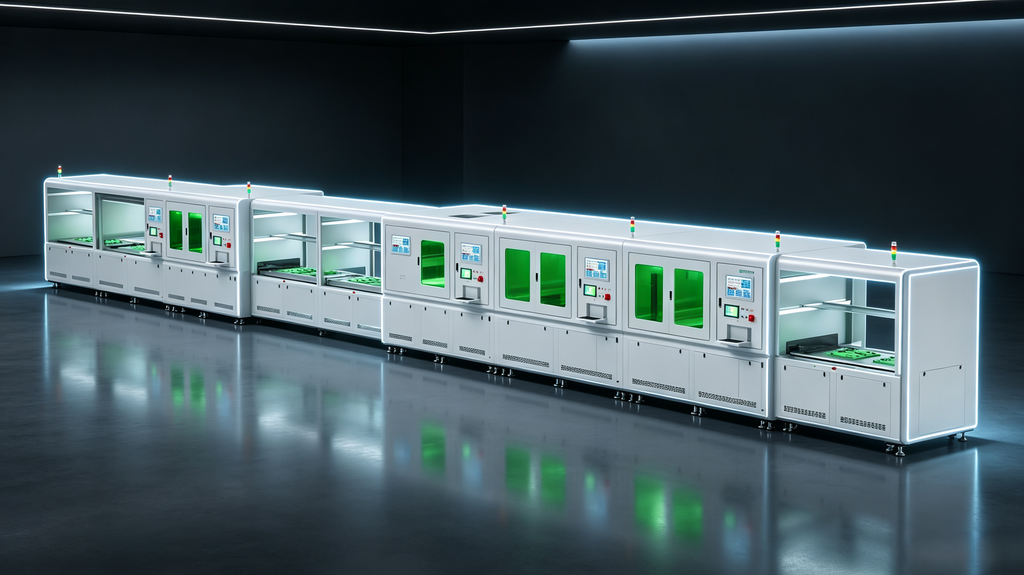
The problem is not always a missing machine. It may lie in the sequence of manufacturing processes and in how the equipment is coordinated.
A well-designed automated PACK line must consider not only which machines are required, but also the order in which each process is performed and the conditions that must be met before a product moves to the next station.
This guide explains why process sequence matters, how it affects production efficiency and quality, and what manufacturers should confirm before specifying a battery module PACK line.
What Makes an Equipment List Insufficient?
An equipment list answers one question: What machines are needed?
It does not necessarily answer a more important question: In what order should the product move through the line, and what conditions must be satisfied before each operation begins?
An automated PACK line is a connected production system. Each station depends on the condition of the product received from the previous process.
For example, a laser welding station may produce consistent joints when the components are correctly positioned and the required joining conditions are met. If the incoming module stack is misaligned, however, welding quality may become inconsistent even when the welding equipment is operating normally.
Two projects with similar equipment lists can therefore achieve different production results. Their process routes, station interfaces, inspection points, and acceptance criteria may differ.
The key is to plan the sequence and the relationships between stations before the equipment configuration is finalized.
Why Does Process Sequence Determine Line Performance?
Process sequence translates a product design into a practical manufacturing route.
It defines where each operation takes place, what conditions must be controlled, and how the product is verified before moving forward.
During process planning, manufacturers should consider three questions:
- Which operations must be completed before a downstream station can operate reliably?
- Where should the product be inspected or verified before it moves to the next process?
- Which processes need buffers to balance material flow, and how should those buffers be sized?
The answers depend on the cell format, module structure, target output, automation level, and traceability requirements.
The same nominal manufacturing process may therefore be arranged differently for different battery module designs.
Cell Grading and Pairing Establish the Input Conditions
Cell grading and pairing are important early steps in many battery module manufacturing processes.
Depending on the project, cells may be evaluated using parameters such as open circuit voltage (OCV), internal resistance, capacity, or other specified criteria. The grading and pairing strategy should follow the customer’s technical requirements.
This strategy affects how cells are grouped, how many sorting categories are needed, and how material buffers between sorting and assembly should be managed.
If cell availability is not coordinated with downstream assembly, production stations may experience material shortages or delays while waiting for suitable cells.
The grading strategy should be agreed before the station layout and material flow are finalized. This helps the engineering team determine the required handling positions and buffer capacity.
Stacking and Compression Establish Module Geometry
For module designs that use stacked cells, stacking and compression help establish the geometry of the assembled cell group.
Downstream processes may depend on the stack’s position, alignment, and stability. If the stack is not properly aligned, component positioning and subsequent joining operations may become more difficult. Uneven compression or inconsistent gaps may also affect the conditions at downstream stations.
These issues do not necessarily indicate a fault in the downstream equipment. They may originate from an upstream process that has not established the required product condition.
The process route should therefore define the relevant positioning and dimensional checks before the module moves to critical downstream operations.
Cleaning and Polarity Verification Help Prepare for Joining
Surface preparation and polarity verification are important considerations in battery module assembly.
Where laser welding is used, surface conditions may influence joint formation. The appropriate cleaning method and its position in the process should be determined according to the materials, joint design, and welding requirements.
Polarity verification helps confirm that the cells or components are oriented correctly before operations that could make an assembly error more difficult or costly to correct.
These checks should be incorporated into the process sequence according to the product design and quality requirements, rather than being added only after the main equipment has been selected.
Welding Should Follow Verified Positioning
Welding is a critical operation in many battery module PACK lines. Its position in the process sequence should reflect the requirements of the joint and the condition of the incoming components.
Where accurate positioning is required, the relevant alignment checks should be completed before welding begins.
Correcting a positioning error before welding may help avoid rework or scrapping an assembly after additional processing.
This is a practical principle rather than a universal rule. The appropriate sequence depends on the product structure, connection method, fixture design, and manufacturing requirements.
Electrical Testing Helps Close the Process Loop
Electrical testing verifies whether an assembled module meets its specified electrical and functional requirements.
The position of each test affects when a defect is detected and how much additional processing has already been completed.
An intermediate check after a critical assembly or welding process may help identify certain problems earlier. A final test before the module leaves the line provides a later verification point against the applicable acceptance criteria.
Many projects use both intermediate and final testing. The right arrangement depends on the product design, defect risks, testing capability, and quality requirements.
The test items, acceptance limits, data recording requirements, and response to failed results should be defined during process planning.
Where Do Process Sequence Problems Usually Appear?
Sequence problems may not be obvious during initial commissioning. They often become more visible when production volume increases or when the line operates continuously.
Welding Before Positioning Is Stable
If components enter a welding station without meeting the required positioning conditions, the process may become less consistent.
The equipment may appear to work during initial trials, yet require more frequent adjustments or produce greater quality variation during continuous production.
Defining positioning requirements and verification points before welding helps reduce this risk.
Testing Is Added Only at the End
Final testing is essential, but relying exclusively on end-of-line inspection may mean that a defect is discovered only after substantial processing has been completed.
Where appropriate, intermediate verification can help identify certain problems earlier and reduce unnecessary downstream work.
The balance between intermediate and final testing should be based on defect risks, quality requirements, inspection capability, and production cost.
Traceability Is Treated as a Reporting Function
Traceability is more useful when it is integrated into the production process from the beginning.
If data collection is planned only after the line is running, the recorded information may not align with the actual process decisions or quality checkpoints.
Planning traceability alongside the process sequence helps define which parameters should be recorded, which product or batch identifiers should be associated with the data, and how the results should be accessed.
Where required, production parameters can be collected and integrated with a manufacturing execution system (MES) as part of normal station operation.
How Does Process Sequence Affect Cycle Time?
Cycle time cannot be evaluated simply by counting stations or averaging their individual processing times.
In a connected production line, actual output is influenced by the slowest constraint, material availability, transfer time, buffer capacity, and the time required for inspection and handling.
Two lines with the same number of stations may therefore achieve different output rates. A process route that requires additional handling between stations may lose time that is not reflected in any individual machine’s specification.
For reference, the following output rates may apply to specific configurations:
- Prismatic cell module PACK line: approximately 12–15 PPM.
- Pouch cell semi-automatic module PACK line: approximately 10–12 PPM.
- Cylindrical cell module PACK line: approximately 30–40 PPM.
These figures are reference values, not guaranteed output rates for every project. The meaning of PPM and the applicable production unit should be clearly defined for each configuration.
Actual throughput depends on the cell specifications, module structure, process route, automation level, and agreed project acceptance conditions.
When evaluating a proposed line, manufacturers should consider not only the speed of individual machines but also whether the complete production route can maintain the required output under the intended operating conditions.
What Should You Confirm Before Specifying a PACK Line?
Projects are easier to plan when the essential technical information is available before the equipment configuration is finalized.
Product and Process Requirements
Prepare the following information where available:
- Cell format, dimensions, and capacity.
- Module structure, including cell count and connection arrangement.
- Required production output and operating schedule.
- Current automation level and target automation level.
- Required joining, testing, and inspection processes.
- Traceability and data interface requirements.
- Quality acceptance criteria for critical processes.
Depending on the project, additional information may be needed, including changeover frequency, expected product mix, and any specific environmental or safety requirements.
Factory Layout and Site Conditions
The factory environment can affect equipment placement and material flow.
Relevant information may include:
- Available floor space and ceiling height.
- Material loading, unloading, and internal logistics routes.
- Utilities and installation conditions.
- Operator access and maintenance space.
- Expected future expansion requirements.
Providing a factory layout drawing helps the engineering team evaluate the available space and develop a preliminary equipment arrangement.
Quality and Acceptance Requirements
Quality requirements should be defined before equipment specifications are finalized.
Manufacturers should confirm the required inspection points, test items, acceptance limits, and data records. These requirements help determine which processes need in-line verification and which tests should be performed at the end of the line.
The acceptance method should be agreed as part of the project technical proposal rather than left open until commissioning.
How Is a Jialuo PACK Line Typically Configured?
Shenzhen Jialuo Intelligent Technology Co., Ltd. provides battery module PACK lines for prismatic, pouch, and cylindrical cell formats.
Depending on the project, Jialuo also provides steel strip production lines and CCS automated production lines. These are distinct equipment categories with different manufacturing functions and should be specified according to the customer’s process requirements.
Prismatic Cell PACK Lines
A prismatic cell configuration may include cell loading, height measurement, open circuit voltage (OCV) testing and sorting, automatic flipping and pairing, adhesive application, stacking and compression, polarity detection, and laser cleaning.
Downstream processes may include busbar laser welding, electrical testing, and further PACK assembly operations.
The final sequence depends on the module design, joining requirements, and required testing scope.
Pouch Cell PACK Lines
A pouch cell configuration may include cell loading, sorting and pairing, tab processing and welding, module assembly and fixing, sealing where required, battery management system (BMS) installation, performance testing, and final assembly.
The appropriate process route and automation level depend on the pouch cell design, module structure, and target output.
Cylindrical Cell PACK Lines
A cylindrical cell configuration may include cell loading, code scanning, height measurement, sorting, pole cleaning, pairing, and insertion into holders or other structural components.
Depending on the design, subsequent operations may include polarity verification, laser welding, and PACK assembly.
Cylindrical, prismatic, and pouch cells have different physical structures and handling requirements. Compatibility should therefore be confirmed against the actual cell specifications rather than assumed across all formats.
Supporting Steel Strip Production Lines
A steel strip production line processes steel material into strips used to secure cells in applicable battery module designs.
Depending on the product and configuration, the process may include:
- Uncoiling and leveling.
- Punching and blanking.
- Automatic sleeve insertion.
- Heat shrinking and cooling, where applicable.
- Ring cutting and automatic bending.
- Welding.
- Dimensional inspection and pull testing, where specified.
One reference configuration occupies approximately 25–35 m in length and 3 m in width, with material widths of approximately 10–40 mm.
These figures apply to a reference configuration. The actual footprint and material compatibility should be confirmed against the steel strip specifications, finished-part drawings, and factory conditions.
A steel strip production line manufactures structural components. It is not the same as the main battery module PACK assembly line.
Frequently Asked Questions
Does a Higher Degree of Automation Always Suit Every Project?
No. The appropriate automation level depends on the required output, product maturity, process stability, investment priorities, and available technical support.
A semi-automatic line may be suitable for a project with developing production volumes or a product design that is still evolving. A higher degree of automation may be more appropriate when production requirements and process conditions are sufficiently established.
The decision should be based on the complete manufacturing plan rather than the automation level alone.
Can an Existing Semi-Automatic Line Be Upgraded in Stages?
In many cases, staged upgrades are possible, provided future requirements are considered during the initial design.
The first phase should leave sufficient space for additional equipment, accessible station interfaces, and suitable control-system integration where required.
However, the feasibility of a later upgrade depends on the original layout, production constraints, utilities, and the scope of the additional automation. These requirements should be reviewed before the first phase is finalized.
Which Station Should Be Automated First?
There is no universal answer.
Manufacturers often evaluate processes that are repetitive, labor-intensive, quality-critical, or difficult to perform consistently. The current production constraint and the potential benefits of improved inspection may also influence the decision.
A review of the existing process route can help identify the most practical starting point.
How Long Does On-Site Installation and Commissioning Take?
As a reference, on-site installation and commissioning may take approximately 7–10 days for a steel strip production line under suitable site conditions.
For other battery module production lines in domestic projects, the on-site period may be approximately 30 days. For overseas projects, on-site implementation may typically take up to around one month.
These are indicative planning figures, not guaranteed schedules. The actual duration depends on the equipment configuration, site readiness, utilities, installation scope, and commissioning requirements.
These periods refer to on-site installation and commissioning, not the complete manufacturing and delivery lead time. The schedule should be confirmed for each project.
What Information Is Needed for a Preliminary Proposal?
A preliminary proposal is usually based on the cell specifications, module drawings, target output, automation requirements, and factory information.
If some details are not yet available, the proposal may be developed using clearly stated assumptions. The configuration can then be refined when the remaining technical information is confirmed.
Key Takeaways
- An equipment list describes what is installed. Process sequence defines how the stations work together and what conditions must be met before each operation.
- Cell grading and pairing influence material flow and buffer planning.
- Stacking and compression establish the geometry required by downstream processes.
- Positioning verification and suitable surface preparation help control welding conditions.
- Intermediate and final testing should be planned according to the product design and quality risks.
- Traceability is more effective when it is integrated into the process design from the beginning.
- Actual cycle time depends on production constraints, handling, and material flow—not simply on the number of stations.
- The right PACK line configuration depends on the cell format, module structure, target output, automation level, and factory conditions.
The best time to address these factors is before the equipment list and layout are finalized.
About Jialuo Intelligent
Shenzhen Jialuo Intelligent Technology Co., Ltd. was founded in 2008 and has focused on new energy automation since 2019. The company is a National High-Tech Enterprise and a Shenzhen Specialized, Refined, Differentiated and Innovative SME.
Jialuo designs and builds lithium battery automation production lines, including battery module PACK lines, steel strip production lines, CCS automated production lines, and supporting equipment such as helium leak testing equipment, cell sorting machines, and blue film wrapping machines.
The company’s engineering capabilities cover automated assembly, punching, bending and riveting, robotic handling, vision inspection and positioning, laser welding, laser cutting, AGV transport, insulation and withstand voltage testing, voltage and internal resistance testing, airtightness testing, and MES data integration, depending on project requirements.
Production parameters can be collected and integrated with an MES system where required to support process monitoring and traceability.
Address: No. 8, Kukeng Chengguang Industrial Park, Dabut Community, Guanlan Subdistrict, Longhua District, Shenzhen, China (Room 101, Building 2, 518100)
Email: jch@cnjialuo.com
Website: www.cnjialuo.com
Planning an Automated PACK Line?
If you are preparing a battery module assembly project, start by clarifying the product requirements and process route—not just the equipment list.
Share your cell specifications, module structure, target output, automation requirements, and available factory space with Jialuo Intelligent. Our engineering team can review these inputs and help develop a preliminary battery module PACK line configuration for your project.
A clearly defined process sequence helps turn an equipment list into a production line designed around your actual manufacturing requirements.