
A Practical Guide to Jialuo’s Battery Manufacturing Equipment
When evaluating a lithium battery automation supplier, buyers need to understand more than the company’s product catalogue. They need to know which manufacturing processes the supplier can support, how the equipment fits into their production plans, and what information is required to configure a suitable solution.
Shenzhen Jialuo Intelligent Technology Co., Ltd. was founded in 2008 and has focused on new energy automation since 2019.
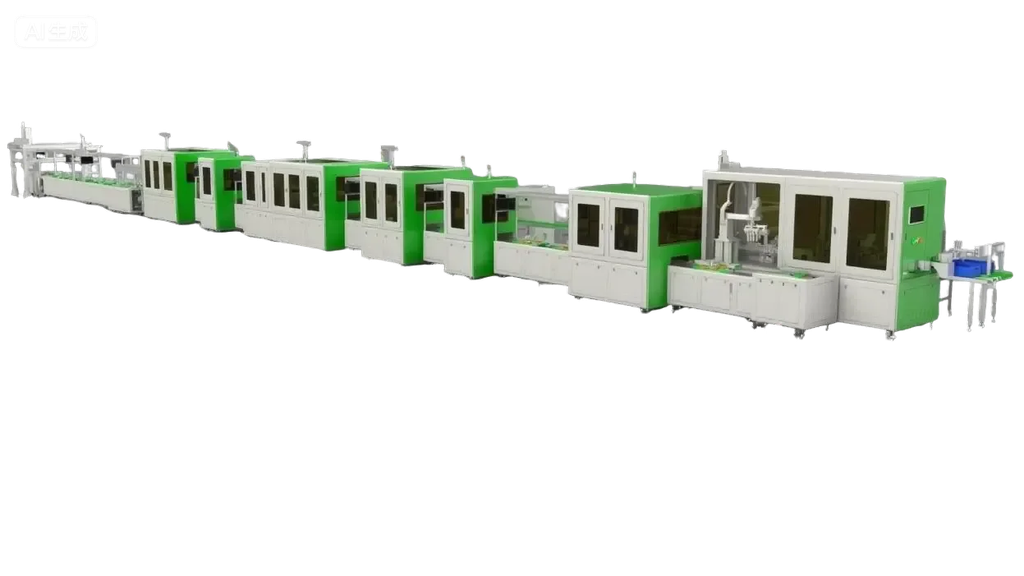
The company’s core product range focuses on the battery module section of manufacturing, with three main production line categories: battery module PACK lines, steel strip production lines, and CCS production lines.
Each line serves a different purpose, from assembling battery cells into modules to manufacturing structural steel strips and cell contact systems.
This guide explains what each production line does, what supporting equipment is available, and what buyers should prepare when evaluating a solution.
1. What Are Jialuo Intelligent’s Three Core Production Lines?
Jialuo’s three core production lines support different processes within battery module manufacturing.
- Battery module PACK line: Assembles battery cells into modules and performs the required joining, testing, and downstream assembly operations.
- Steel strip production line: Processes steel strips used to secure cells in applicable battery module designs.
- CCS production line: Manufactures the Cell Contact System (CCS), which integrates electrical connections and signal collection components.
Although these lines may support the same broader battery manufacturing project, they perform different functions. The appropriate configuration depends on the customer’s product design and manufacturing requirements.
2. Battery Module PACK Production Lines
A battery module PACK line brings individual cells together into a module through a sequence of handling, sorting, assembly, joining, and testing operations.
Jialuo provides PACK line solutions for three cell formats:
- Prismatic cell module PACK lines
- Pouch cell semi-automatic module PACK lines
- Cylindrical cell module PACK lines
The process route varies according to cell format, module structure, connection method, and required automation level.
Prismatic Cell Module PACK Lines
A prismatic cell configuration may include cell loading, height measurement, open circuit voltage (OCV) testing and sorting, cell flipping and pairing, adhesive application, stacking and compression, polarity detection, laser cleaning, busbar laser welding, electrical testing, and subsequent PACK assembly.
The exact station arrangement depends on the module design and required production process.
Pouch Cell Module PACK Lines
A pouch cell configuration may include cell loading, sorting and pairing, tab processing and welding, module assembly and fixing, sealing where required, battery management system (BMS) installation, performance testing, and final assembly.
Jialuo’s pouch cell solutions include semi-automatic configurations. The appropriate automation level depends on the target output, product mix, and investment plan.
Cylindrical Cell Module PACK Lines
A cylindrical cell configuration may include cell loading, code scanning, height measurement, sorting, pole cleaning, pairing, insertion into holders, polarity verification, laser welding where specified, and PACK assembly.
Because cylindrical cells differ from prismatic and pouch cells in physical structure and handling requirements, line compatibility should be evaluated against the actual cell specifications.
Reference Output Rates
The following figures are reference values for specific configurations:
- Prismatic cell module PACK line: approximately 12–15 PPM.
- Pouch cell semi-automatic module PACK line: approximately 10–12 PPM.
- Cylindrical cell module PACK line: approximately 30–40 PPM.
These figures are not universal performance guarantees. The actual output rate depends on the defined production unit, cell specifications, module structure, process route, automation level, and project acceptance criteria.
For a reliable proposal, buyers should provide the cell specification, module drawing, target output, and expected operating conditions.
3. Steel Strip Production Lines
A steel strip production line manufactures steel strips used to secure cells in applicable battery module designs.
Unlike a battery module PACK assembly line, which handles and assembles cells, a steel strip line processes the steel material into the required components.
Depending on the product design, the process may include:
- Uncoiling and leveling
- Punching and blanking
- Automatic sleeve insertion
- Heat shrinking and cooling, where applicable
- Ring cutting
- Automatic bending
- Welding
- Dimensional inspection
The sequence and equipment configuration depend on the steel strip design, material specifications, and required inspection points.
Reference Equipment Dimensions
One reference configuration occupies approximately 25–35 m in length and 3 m in width, with material widths of approximately 10–40 mm.
These figures apply to a specific reference configuration. Final dimensions and material compatibility should be confirmed against the customer’s strip specifications, finished-part drawings, and factory conditions.
For projects requiring this equipment, buyers should provide the steel strip drawings, material dimensions, required output, and available installation space.
4. CCS Production Lines
A CCS production line manufactures the Cell Contact System (CCS), also referred to in some product contexts as an integrated busbar assembly.
The CCS combines electrical connection components with signal collection elements. Depending on the design, it may include copper or aluminum busbars, flexible printed circuit (FPC) components, and plastic structural parts.
The manufacturing process must meet the requirements of the specific CCS design, including component positioning, joining quality, and electrical performance.
Typical CCS Production Processes
Depending on the product and configuration, an automated CCS production line may include:
- Visual verification of busbar and FPC assembly
- FPC positioning and lamination
- Busbar placement
- Multi-point pulse hot riveting
- Laser welding, including dual-laser configurations where specified
- Electrical testing
- Automated optical inspection (AOI)
Pulse hot riveting may be used to connect FPC layers to structural components, while laser welding may be used for specified busbar joints. The joining method and process sequence must be selected according to the product design and technical requirements.
Why CCS Line Configuration Matters
The number and arrangement of stations depend on the CCS structure, the joining methods, inspection requirements, and target production output.
A preliminary technical review should establish the product drawings, connection requirements, critical quality characteristics, and required inspection coverage before the equipment configuration is finalized.
5. What Supporting Equipment Is Available?
In addition to its three core production line categories, Jialuo provides supporting equipment for selected battery manufacturing processes.
Helium Leak Testing Equipment
Helium leak testing equipment supports leak inspection for applicable battery components, including cover plates where required.
Depending on the product and equipment configuration, related processes may also involve electrical performance testing or film application. The specific inspection scope should be confirmed against the customer’s product design and quality requirements.
Semi-Automatic Welding Lines
A prismatic module semi-automatic welding line provides an alternative to a fully automated configuration for applicable welding and testing processes.
It may be worth considering for projects with developing production volumes, changing product designs, or a preference for a lower initial automation level.
The appropriate solution depends on the required output, joining process, operator involvement, and quality standards.
Cell Sorting Machines
Cell sorting machines help grade cells according to specified parameters, such as voltage and internal resistance.
The grading results support the pairing strategy used during module assembly. Compatible cell formats and testing capabilities should be confirmed for the selected machine.
Cylindrical, prismatic, and pouch cells have different physical structures, so compatibility should not be assumed across all formats.
Blue Film Wrapping Machines
A semi-automatic blue film wrapping machine applies insulating film to the specified surfaces of a prismatic cell.
Depending on the machine configuration, the process may cover the wide faces, narrow faces, bottom, and top of the cell.
The required coverage and wrapping method should be confirmed against the cell dimensions and insulation requirements.
6. How Should Buyers Evaluate a Battery Automation Supplier?
Understanding a supplier’s product range is only the first step. Buyers should also confirm whether the proposed equipment matches their actual manufacturing requirements.
Define the Required Process
Identify which processes need to be completed in-house and which equipment categories are required.
For example, a project focused on assembling cells into modules may require a PACK line and cell sorting equipment. A project that also manufactures CCS assemblies or steel strip components may need additional production lines.
Not every project requires all three core lines.
Confirm Product Specifications
Prepare the information relevant to the selected process, including:
- Cell format and dimensions
- Module structure and drawings
- Steel strip or CCS component drawings, where applicable
- Target output and production schedule
- Required joining and testing methods
- Automation level
- Traceability and data interface requirements
These inputs help the engineering team assess the equipment configuration and identify any unresolved technical questions.
Review the Factory Layout
Available floor space, ceiling height, material flow, utilities, and maintenance access can all affect equipment placement.
Providing a factory layout drawing helps the engineering team evaluate the installation footprint and develop a preliminary equipment arrangement.
Confirm Installation and Commissioning Requirements
Installation and commissioning depend on the equipment scope, site readiness, and project conditions.
As reference planning figures, on-site installation and commissioning may take approximately 7–10 days for a steel strip production line. For other module lines, the on-site period may be approximately 30 days for domestic projects, while overseas projects may typically require up to around one month for the on-site stage.
These figures are indicative, not guaranteed schedules. They refer to on-site installation and commissioning rather than the complete manufacturing and delivery lead time. The actual schedule should be confirmed for each project.
7. Frequently Asked Questions
Does Jialuo Only Build the Three Core Production Lines?
No. The three core lines represent the main product categories, and Jialuo also provides supporting equipment such as helium leak testing equipment, cell sorting machines, and blue film wrapping machines.
The required equipment depends on the customer’s manufacturing scope and product specifications.
What Is the Difference Between a PACK Line, a Steel Strip Line, and a CCS Line?
A battery module PACK line assembles cells into modules and performs the required downstream processes.
A steel strip production line manufactures steel strips used to secure cells in applicable module designs.
A CCS production line manufactures the cell contact system, which integrates electrical connections and signal collection components.
These lines serve different functions and should be selected according to the project’s process requirements.
Can Jialuo Customize a Production Line?
The equipment configuration can be developed according to the customer’s cell format, module structure, target output, automation requirements, and factory conditions.
A preliminary proposal can be prepared using the available technical information. Where details remain unconfirmed, assumptions should be stated clearly and reviewed before the final configuration is agreed.
What Information Is Needed for a Preliminary Proposal?
The most useful starting information includes cell specifications, module drawings, target output, required processes, automation level, and available factory space.
For steel strip or CCS projects, the corresponding component drawings and technical requirements are also important.
8. Key Takeaways
Jialuo Intelligent’s three core lithium battery production line categories serve different functions within battery module manufacturing:
- Battery module PACK lines assemble cells into modules and perform the required joining, testing, and downstream operations.
- Steel strip production lines manufacture steel strips used to secure cells in applicable module designs.
- CCS production lines manufacture cell contact system assemblies that integrate electrical connections and signal collection components.
Supporting equipment, including helium leak testing equipment, cell sorting machines, and blue film wrapping machines, can complement the main production processes.
The right solution depends on the customer’s product design, required process scope, target output, automation level, and site conditions. A clear understanding of these requirements helps both sides move from an initial equipment inquiry to a practical technical proposal.
About Jialuo Intelligent
Shenzhen Jialuo Intelligent Technology Co., Ltd. was founded in 2008 and has focused on new energy automation since 2019. The company provides lithium battery automation equipment and production line solutions, including battery module PACK lines, steel strip production lines, CCS automated production lines, and supporting equipment.
Its capabilities include automated assembly, punching, bending and riveting, robotic handling, vision inspection and positioning, laser welding, laser cutting, electrical testing, airtightness testing, and MES data integration, depending on project requirements.
Address: No. 8, Kukeng Chengguang Industrial Park, Dabut Community, Guanlan Subdistrict, Longhua District, Shenzhen, China (Room 101, Building 2, 518100)
Email: jch@cnjialuo.com
Website: cnjialuo.com
Planning a Lithium Battery Production Line?
If you are planning a battery module manufacturing project, start by identifying the processes your product requires.
Share your cell specifications, module or component drawings, target output, automation requirements, and available factory space with Jialuo Intelligent. Our engineering team can review your requirements and help identify the appropriate production line configuration and supporting equipment.
A well-defined process scope is the first step toward selecting the right equipment for your manufacturing project.