
Discover everything you need to know about Battery Module Assembly Lines in 2026, including manufacturing processes, automation technologies, key equipment, production costs, and future industry trends. Learn how modern battery manufacturers improve quality, efficiency, and scalability with intelligent production solutions.
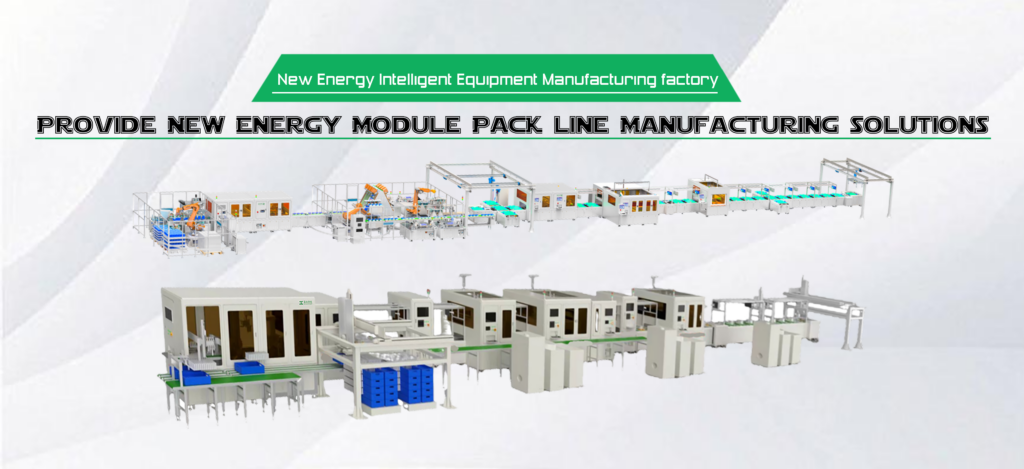
The Ultimate Guide to Battery Module Assembly Lines in 2026
The global battery industry is expanding at an unprecedented pace. Driven by the rapid growth of electric vehicles (EVs), battery energy storage systems (BESS), commercial transportation, and renewable energy applications, manufacturers are under increasing pressure to deliver higher production capacity without compromising quality.
At the same time, battery technology is evolving faster than ever. New cell formats, stricter quality standards, and digital manufacturing requirements are forcing battery manufacturers to rethink how production lines are designed and operated.
A modern Battery Module Assembly Line is no longer simply a combination of individual machines. It is an intelligent manufacturing system that integrates robotics, precision motion control, laser processing, machine vision, quality inspection, manufacturing execution systems (MES), and real-time production data into one highly coordinated platform.
For companies planning a new battery factory or upgrading an existing production line, understanding the structure and operation of a Battery Module Assembly Line has become essential for improving productivity, reducing operating costs, and ensuring long-term competitiveness.
This guide explains how modern battery module assembly lines work, which equipment is required, how automation improves production efficiency, and what trends manufacturers should prepare for over the next several years.
What Is a Battery Module Assembly Line?
A Battery Module Assembly Line is an automated manufacturing system used to assemble multiple battery cells into complete battery modules before they are integrated into battery packs.
Depending on the battery chemistry, cell format, and customer requirements, a complete production line may include automatic material handling, electrical testing, precision positioning, laser welding, machine vision inspection, traceability systems, and end-of-line testing.
Unlike traditional manual assembly, automated production lines ensure that every battery module is manufactured under consistent process conditions. This consistency is essential for achieving stable electrical performance, improved safety, and higher product reliability.
Modern battery module assembly lines are widely used in the production of lithium iron phosphate (LFP) batteries, nickel-based battery systems, and various energy storage products for electric vehicles, commercial transportation, industrial equipment, and stationary energy storage applications.
Why Battery Module Assembly Lines Have Become Essential
The battery manufacturing industry has entered an era where quality, consistency, and production efficiency are equally important.
Several factors are accelerating the adoption of automated battery module assembly lines.
Growing Global Demand
The worldwide transition toward electrification continues to drive investment in battery manufacturing facilities.
Automotive manufacturers, energy storage companies, and battery producers are expanding production capacity to meet increasing demand from electric vehicles, renewable energy projects, and industrial electrification.
Higher production volumes require manufacturing systems capable of operating continuously while maintaining stable product quality.
Increasing Quality Standards
Battery modules contain dozens of precision components.
Even a small positioning error, poor weld, or contamination during assembly may reduce battery performance or shorten service life.
Automated assembly systems minimize process variation and significantly improve manufacturing consistency.
Rising Labor Costs
Many manufacturers face increasing labor costs together with shortages of experienced operators.
Automation helps reduce dependence on manual operations while improving production stability and lowering long-term operating expenses.
Complete Production Traceability
Today’s battery manufacturers are expected to maintain detailed production records for every module.
Modern assembly lines automatically collect production data, including:
- Cell identification
- Process parameters
- Welding information
- Inspection results
- Production time
- Equipment status
- Quality records
This information supports quality management, process optimization, and after-sales traceability.
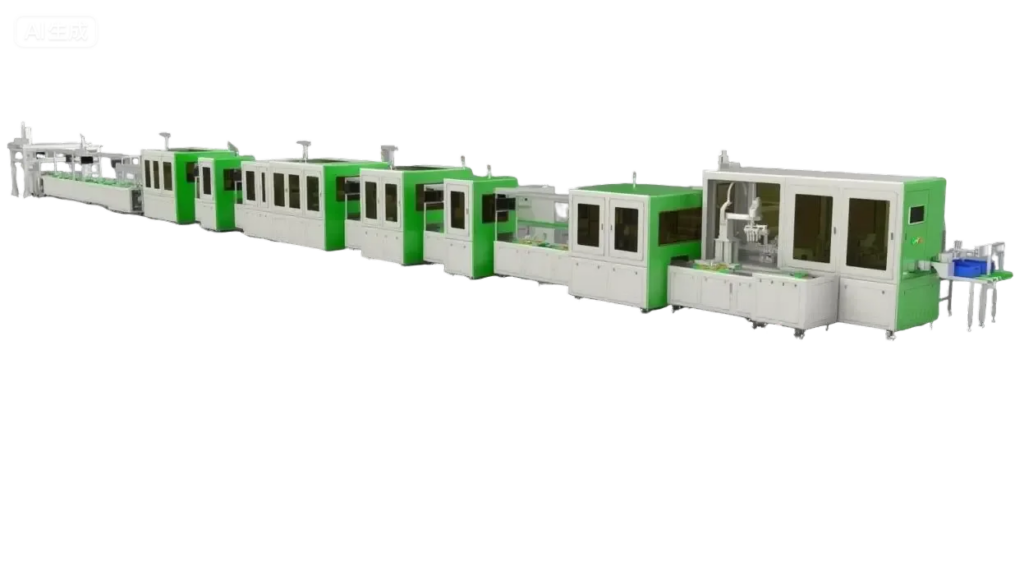
Typical Battery Module Assembly Process
Although production layouts differ depending on customer requirements, most modern battery module assembly lines follow a similar manufacturing sequence.
1. Cell Loading
Battery cells are automatically transferred from storage into the production line using robotic handling systems or automatic feeding equipment.
Accurate loading is the foundation of every subsequent manufacturing process.
Reliable positioning reduces downstream alignment errors and improves production stability.
2. OCV Testing and Cell Matching
Before assembly begins, each battery cell undergoes Open Circuit Voltage (OCV) testing.
The testing system measures electrical characteristics and groups cells with similar performance into the same module.
Proper cell matching helps improve battery consistency, balance, and service life.
3. Automatic Cell Stacking
Matched battery cells are automatically positioned according to the required module design.
High-precision servo systems ensure repeatable positioning accuracy while reducing mechanical stress during handling.
Automatic stacking significantly improves production efficiency compared with manual assembly.
4. Adhesive Dispensing and Structural Assembly
Depending on product design, automatic dispensing equipment applies adhesive materials with high accuracy.
Uniform dispensing improves structural strength while maintaining consistent thermal performance throughout the battery module.
The dispensing process is monitored continuously to ensure stable quality during mass production.
5. Module Compression
After stacking, battery cells are compressed to maintain the required dimensional accuracy before welding.
Precise compression force helps improve assembly consistency while reducing internal stress within the module.
6. Busbar Positioning and Laser Welding
Once the battery cells have been compressed and secured, the next stage is electrical connection. Busbars are accurately positioned using automated fixtures and robotic handling systems before the welding process begins.
Laser welding has become the preferred joining technology in modern battery manufacturing because it offers high precision, minimal heat input, and excellent process repeatability. Compared with conventional welding methods, laser welding produces stronger electrical connections while reducing deformation and improving production consistency.
To ensure stable weld quality, modern battery module assembly lines continuously monitor welding parameters such as laser power, welding speed, focal position, and penetration depth. These process parameters are automatically recorded and linked to the product’s traceability data.
For manufacturers producing high-volume battery modules, laser welding plays a critical role in achieving both high production efficiency and long-term product reliability.
7. AI Vision Inspection and Quality Control
Quality inspection is one of the most important stages of the entire production process.
Modern battery module assembly lines increasingly combine high-resolution industrial cameras with AI-powered vision algorithms to detect defects that may not be visible during manual inspection.
Typical inspection items include:
- Cell alignment accuracy
- Busbar positioning
- Weld appearance
- Surface contamination
- Missing components
- Incorrect polarity
- Label verification
- QR code readability
Unlike traditional visual inspection, AI-based systems continuously improve through data analysis and can identify abnormal production trends before defects become widespread.
For battery manufacturers, this means higher first-pass yield, lower scrap rates, and more stable production quality.
8. Electrical Testing and Traceability
After mechanical assembly has been completed, each battery module undergoes comprehensive electrical testing.
Depending on customer requirements, testing may include:
- Insulation resistance testing
- Voltage verification
- Internal resistance measurement
- Continuity testing
- Functional testing
- Safety inspection
Every production result is automatically stored within the manufacturing execution system (MES), creating a complete digital production record for each battery module.
Traceability has become increasingly important as automotive manufacturers demand greater transparency throughout the battery supply chain.
Complete production records not only improve quality management but also simplify maintenance, warranty analysis, and future product improvements.
9. Manufacturing Execution System (MES) Integration
Digital manufacturing has become a standard requirement for modern battery factories.
A Battery Module Assembly Line is no longer expected to perform only mechanical operations. It must also exchange production data with factory management systems in real time.
Integration with MES allows manufacturers to monitor:
- Production output
- Equipment utilization
- Cycle time
- Yield rate
- Alarm history
- Equipment status
- Production scheduling
- Operator performance
This digital connectivity enables managers to make faster decisions based on real-time production data instead of manual reports.
As factories continue moving toward Industry 4.0, intelligent data integration will become even more valuable.
Key Benefits of an Automated Battery Module Assembly Line
Compared with manual assembly, automated production lines offer several significant advantages.
Higher Production Efficiency
Automation reduces idle time between processes and enables continuous production.
Improved Product Consistency
Standardized manufacturing processes reduce human variation and improve overall quality.
Lower Operating Costs
Although initial investment is higher, automation significantly reduces long-term labor costs and improves return on investment.
Better Traceability
Every production step can be digitally recorded, supporting quality management and regulatory compliance.
Flexible Manufacturing
Modern production lines can be configured to support multiple battery module designs with relatively short changeover times.
How Much Does a Battery Module Assembly Line Cost?
One of the most common questions from manufacturers is the cost of building a battery module assembly line.
In reality, there is no universal price because every project is customized according to production requirements.
The total investment depends on several factors, including:
- Battery cell format
- Module dimensions
- Production capacity (UPH)
- Automation level
- Testing requirements
- Laser welding configuration
- MES integration
- Factory layout
- Local safety standards
- Future expansion plans
Rather than selecting equipment based only on purchase price, manufacturers should evaluate the total cost of ownership over the entire lifecycle of the production line.
A well-designed production line often delivers greater long-term value through improved efficiency, higher product quality, and reduced operating costs.
How to Choose the Right Battery Module Assembly Line Supplier
Selecting a reliable equipment supplier is one of the most important decisions during a battery factory investment project.
When evaluating suppliers, manufacturers should consider more than equipment specifications alone.
Important evaluation factors include:
- Engineering experience
- Customization capability
- Manufacturing quality
- Automation expertise
- Software integration capability
- After-sales technical support
- Spare parts availability
- Project management experience
- Global service capability
An experienced supplier should be able to provide not only equipment but also process optimization, factory planning, installation support, operator training, and long-term technical service.
Future Trends in Battery Module Manufacturing
Battery manufacturing continues to evolve rapidly.
Several technology trends are expected to shape the next generation of battery module assembly lines.
AI-Powered Quality Inspection
Artificial intelligence will continue improving inspection accuracy while reducing false detection rates.
Digital Twin Technology
Virtual production models will allow manufacturers to optimize production before physical installation.
Flexible Manufacturing
Future production lines will support faster product changeovers as battery designs continue to evolve.
Intelligent Predictive Maintenance
Equipment will increasingly monitor its own operating condition and predict maintenance requirements before failures occur.
Fully Connected Smart Factories
Battery production lines will become increasingly integrated with factory-wide digital management systems, enabling greater production transparency and operational efficiency.
Frequently Asked Questions
What batteries can a Battery Module Assembly Line support?
The production line can be customized according to battery chemistry, module dimensions, and customer manufacturing requirements.
Can the production line connect with MES?
Yes. Most modern production lines support MES, ERP, and other factory management systems.
How long does installation usually take?
Project schedules vary depending on production capacity and equipment configuration. Installation and commissioning are normally planned as part of the complete turnkey project.
Can the production line be expanded later?
Yes. Modular production line design allows future capacity expansion when production demand increases.
Conclusion
As global battery demand continues to grow, manufacturers must balance production efficiency, product quality, flexibility, and long-term operating costs.
A modern Battery Module Assembly Line is far more than a collection of automated machines. It is the foundation of intelligent battery manufacturing, combining advanced automation, precision engineering, digital traceability, and smart factory technologies into a unified production system.
For manufacturers planning new battery production facilities or upgrading existing factories, investing in the right assembly line is a strategic decision that can improve competitiveness for many years to come.
Choosing an experienced automation partner with strong engineering capabilities, flexible customization, and comprehensive technical support is equally important to ensuring long-term project success.
Call to Action
Whether you are planning a new battery factory or upgrading an existing production line, choosing the right automation solution starts with understanding your manufacturing goals.
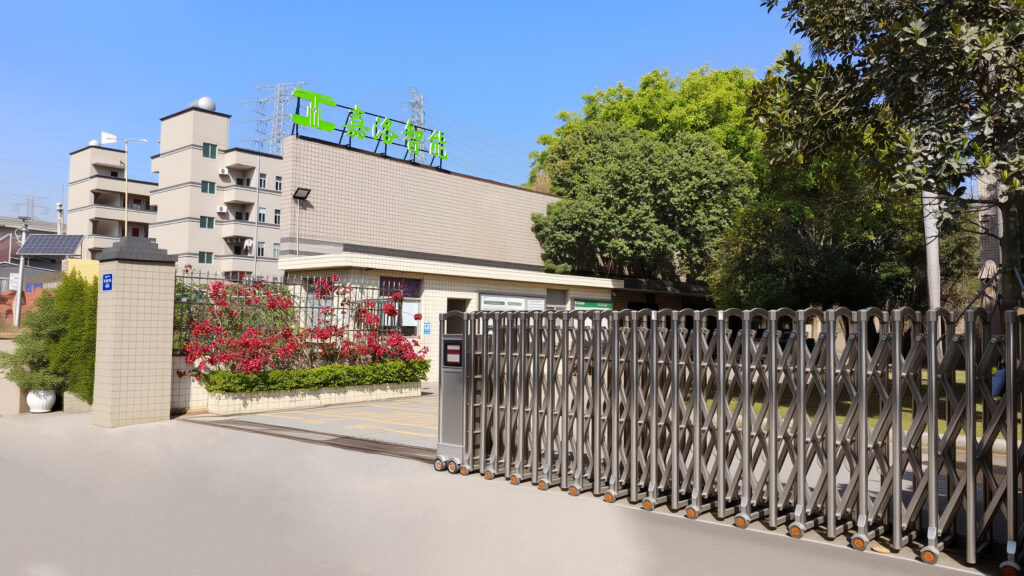
At Jialuo Intelligent, we specialize in customized Battery Module Assembly Lines, Battery Pack Assembly Lines, CCS Production Lines, and intelligent lithium battery manufacturing solutions. Our engineering team works closely with customers to develop efficient, scalable, and reliable production systems tailored to their products and production requirements.
If you are looking for a turnkey battery manufacturing solution, our team is ready to discuss your project and help you build a smarter, more competitive battery factory.